
The neutrophil to lymphocyte ratio (NLR) is a number worked out from a routine complete blood count (CBC) by dividing neutrophils by lymphocytes. In healthy adults it usually sits somewhere between about 0.8 and 3.5, but different studies and websites quote different “normal” ranges, which confuses many people reading their reports. In this guide you will learn how to calculate NLR, why the normal range varies, what a high or low value can mean, and the mistakes to avoid when reading your own result.
What Is the Neutrophil to Lymphocyte Ratio?
NLR compares two types of white blood cells. A review in the International Journal of Molecular Sciences describes it as a marker that combines two sides of immunity: the innate response, mainly driven by neutrophils, and the adaptive response, supported by lymphocytes.
- Neutrophils are the first-line cells that rise quickly in bacterial infection, injury and physical stress.
- Lymphocytes include T cells and B cells, and they often fall when the body is under stress.
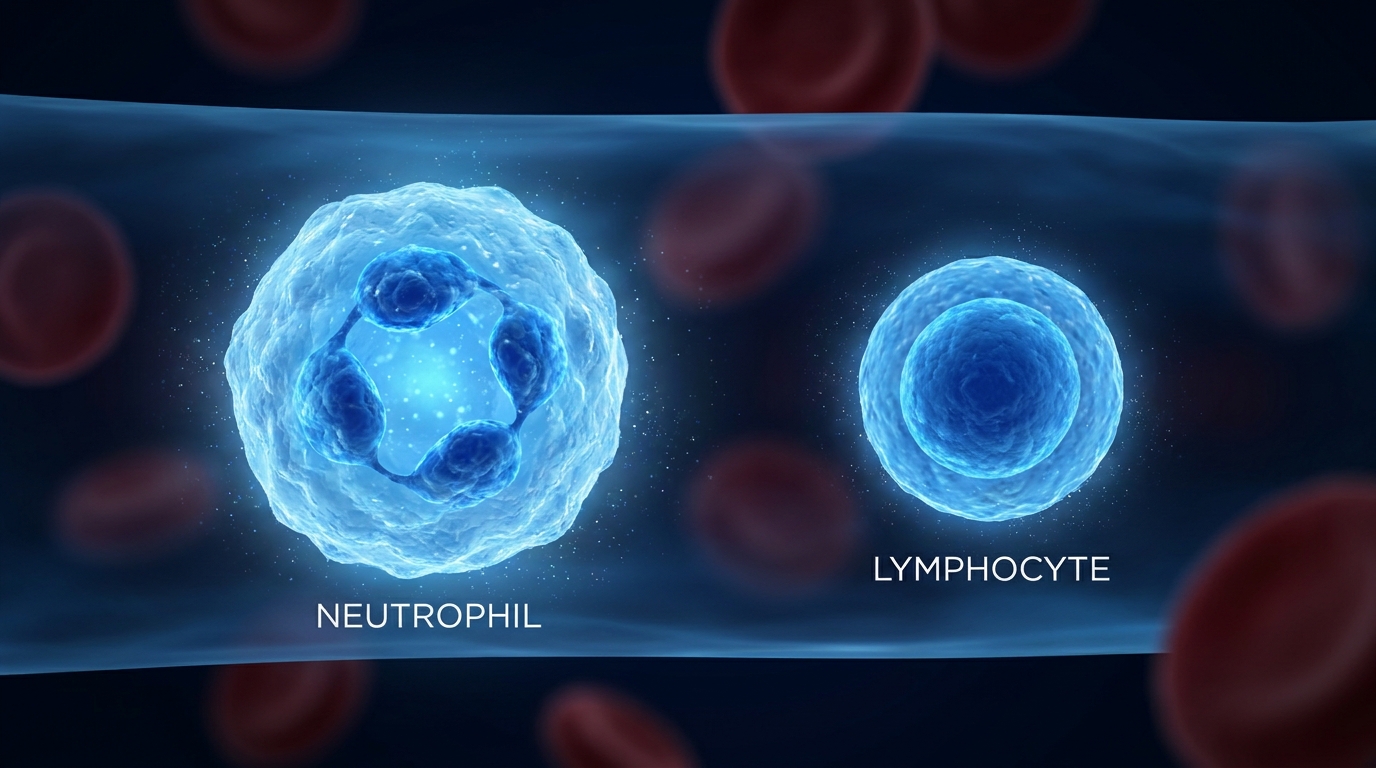
Because the two move in opposite directions during stress, the ratio can change even when the total white cell count still looks normal.
NLR Formula and How to Calculate It
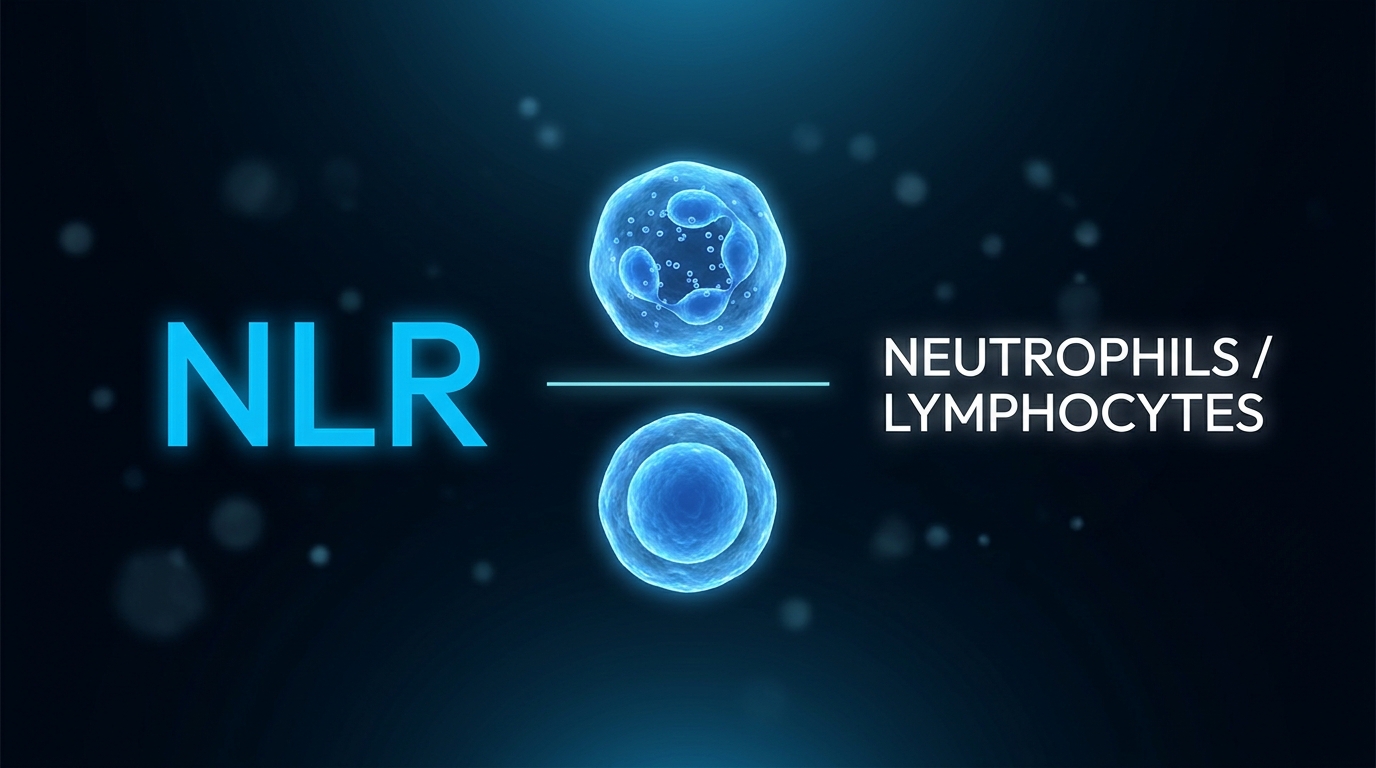
NLR = Absolute Neutrophil Count (ANC) ÷ Absolute Lymphocyte Count (ALC)
Both numbers come from the CBC with differential. The result has no unit, but both counts must be in the same unit, such as cells/µL or ×10³/µL.
Steps:
- Find the absolute neutrophil count on your report.
- Find the absolute lymphocyte count.
- Divide the neutrophil count by the lymphocyte count.
You can also use our NLR calculator below.
[Yahan NLR calculator wala Custom HTML block lagayein]
Can You Use Percentages Instead of Absolute Counts?
Yes, and the result is the same. Absolute counts are the white cell count multiplied by each percentage, so the white cell count cancels out when you divide. That means NLR also equals neutrophil % ÷ lymphocyte %. Absolute counts are still useful, because they show whether the neutrophils or the lymphocytes are themselves too high or too low.
Worked Examples
Example 1: Within a typical range. Neutrophils 4.5 ×10³/µL, lymphocytes 2.0 ×10³/µL.
NLR = 4.5 ÷ 2.0 = 2.25.
Example 2: Using percentages. WBC 9,000/µL, neutrophils 70%, lymphocytes 20%.
ANC = 6,300 and ALC = 1,800. NLR = 6,300 ÷ 1,800 = 3.5. The shortcut 70 ÷ 20 gives the same 3.5.
Example 3: Raised NLR. WBC 14,000/µL, neutrophils 85%, lymphocytes 8%.
ANC = 11,900 and ALC = 1,120. NLR = 11,900 ÷ 1,120 = about 10.6. This kind of pattern can appear with infection, severe stress or after steroid treatment, so it must be interpreted by a clinician.

What Is the Normal NLR Range?
There is no single universal normal value. The review authors state that a precise and unique cut-off value has not yet been found, even though NLR is well established as a flag of immune balance.
| Source | Group studied | NLR value |
|---|---|---|
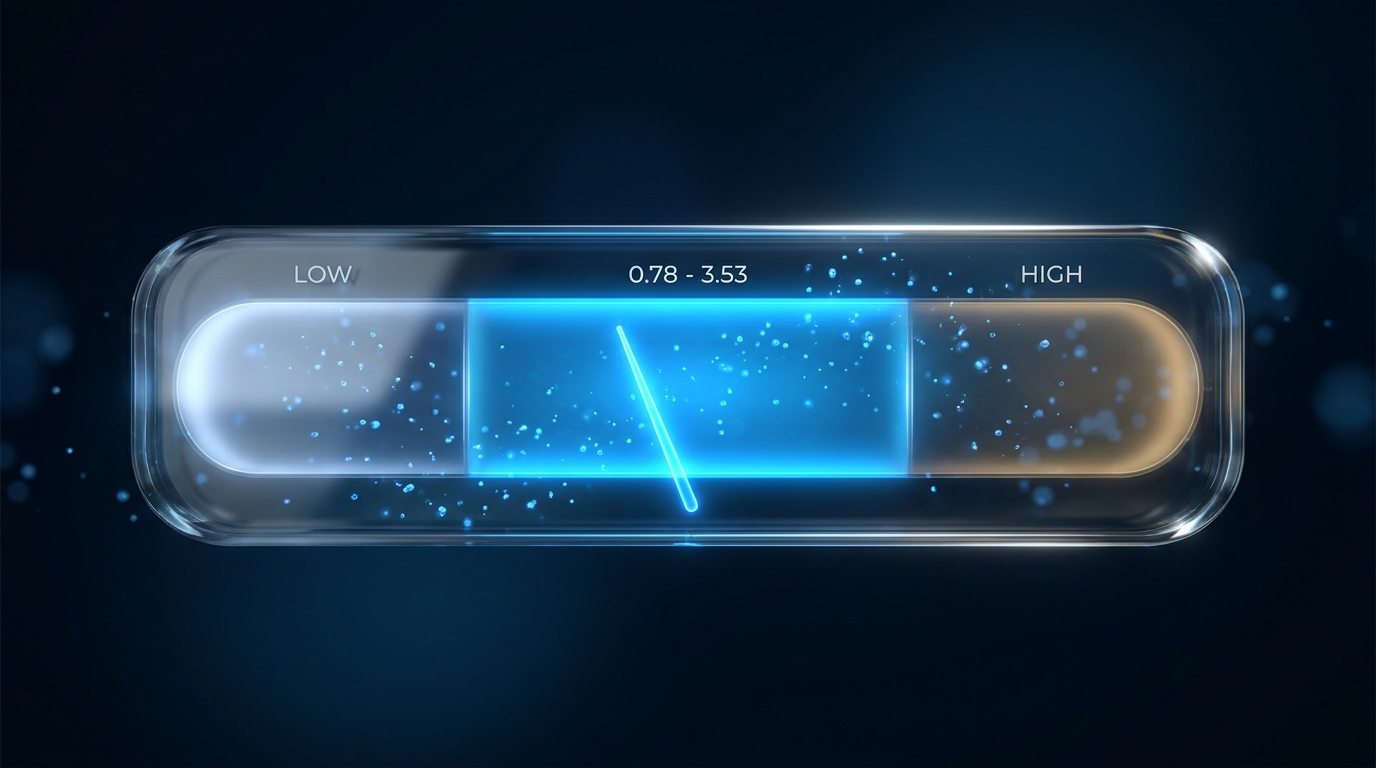
| Forget et al., 2017 | Healthy, non-elderly adults | 0.78 to 3.53 |
| Danish population study (cited in a 2025 review) | Adults aged 18 to 75 | About 0.74 to 4.94 |
| Many commercial lab sites | General adults | About 1.0 to 3.0 |
| Review of NLR | “Grey zone” | 2.3 to 3.0 |
Why the ranges differ: studies use different populations, analysers and statistical methods, and the ratio is sensitive to stress and recent illness. For everyday reading, a value of roughly 1 to 3 is commonly described as typical, and a value up to about 3.5 has been seen in healthy adults. Always compare your result with the reference range printed on your own lab report.
What Does a High NLR Mean?
A raised NLR usually means neutrophils are up, lymphocytes are down, or both. According to the review, an isolated rise in neutrophils and a higher NLR can be seen in bacterial or fungal infection, acute stroke, heart attack, atherosclerosis, severe trauma and cancer.
Stress hormones matter too. The same review explains that high cortisol increases neutrophils while reducing lymphocytes, and catecholamines such as adrenaline can have a similar effect. This is why steroid medicines, severe emotional stress and intense exercise can all push NLR up.
A high NLR does not mean cancer or a serious disease by itself. A single reading is often temporary, and the trend over time is more useful.
NLR in Sepsis and Infection
NLR has been widely studied in sepsis. In the review, one study of infection groups based on procalcitonin proposed a cut-off of 5 for infection or sepsis after applying exclusion criteria, and higher cut-offs for more severe groups. These figures come from individual studies and are not diagnostic thresholds for home use.
The same review notes that NLR rises earlier than the white cell count and CRP during sepsis, and a meta-analysis found that a higher NLR was linked with poorer outcomes. Another review reports that in sepsis, improvement in the clinical course is linked with NLR falling below 7.
NLR in Heart Disease, Cancer and COVID-19
Researchers have also linked NLR with outcomes in many other settings. The authors of the 2022 review report that NLR independently relates to mortality in the general population and in groups with sepsis, pneumonia, COVID-19 and cancer. A 2025 review mentions that in COVID-19 an NLR above 6.82 was associated with poor outcomes in one study.
These are population-level research findings. They do not allow anyone to diagnose a disease from a single NLR.
What Does a Low NLR Mean?
A low NLR means neutrophils are relatively low or lymphocytes are relatively high. In many people with an otherwise normal CBC, a mildly low NLR is not clinically significant. The more important step is to look at the absolute neutrophil and lymphocyte counts. Very low neutrophils (neutropenia) or very low lymphocytes (lymphopenia) matter more than the ratio itself.
Factors That Can Change Your NLR
- Corticosteroids: raise neutrophils and lower lymphocytes.
- Physical or emotional stress: short-term rises are common.
- Intense exercise: a temporary neutrophil rise with a lymphocyte dip.
- Infection or inflammation: raise neutrophils.
- Age: values tend to differ in older adults.
- Other conditions: the review lists diabetes, HIV, blood disorders, acute trauma and several acute cardiovascular events among factors linked with higher NLR.

NLR vs Other Blood Test Markers
| Marker | What it shows |
|---|---|
| White blood cell (WBC) count | Total number of white cells |
| NLR | Balance between neutrophils and lymphocytes |
| CRP | Liver response to inflammation |
| Procalcitonin | Marker used for bacterial infection |
NLR is a simple, low-cost addition because it is calculated from a test that is already done, but it is not a replacement for any of these tests.
Limitations of NLR
- No universal cut-off: ranges and thresholds vary by study and laboratory.
- Not specific: many unrelated conditions raise the ratio.
- Single value is noisy: neutrophils change within hours, while lymphocytes change more slowly, so repeating the test gives more information.
- Medication effects: steroids can change the ratio quickly.
- Not a diagnosis: NLR supports a clinician’s judgement and does not replace clinical examination or other tests.
When Should You See a Doctor?
Speak with a doctor if your NLR is persistently outside your lab’s range, if it is high together with fever, weight loss, night sweats, shortness of breath or chest pain, or if your neutrophil or lymphocyte counts are themselves flagged as abnormal. Do not start or stop any medicine based on NLR alone.
Key Takeaways
- NLR = absolute neutrophil count ÷ absolute lymphocyte count.
- Studies report normal values of roughly 0.78 to 3.53 in healthy adults, and there is no universal cut-off.
- Percentages give the same result as absolute counts.
- Stress, steroids, infection and exercise can raise NLR.
- A single value is not a diagnosis. Read it with the clinical picture and repeat tests.
Conclusion
The neutrophil to lymphocyte ratio is a simple and useful marker of how the immune system is balancing stress and inflammation, but its meaning depends on context. Understanding why normal ranges vary and which factors can shift the ratio will help you read your CBC more calmly. Use the calculator above to check a value, and always discuss any abnormal result with a qualified doctor.
Frequently Asked Questions
What is a normal NLR?
A study of healthy non-elderly adults found values between 0.78 and 3.53, and many labs describe roughly 1 to 3 as typical. There is no single universal value.
What does a high NLR mean?
It usually means neutrophils are raised, lymphocytes are lowered, or both. Infection, inflammation, stress, trauma, steroid use and several chronic diseases can do this. It is not a diagnosis by itself.
How do you calculate NLR?
Divide the absolute neutrophil count by the absolute lymphocyte count. You can also divide the neutrophil percentage by the lymphocyte percentage.
Is an NLR of 5 serious?
An NLR of 5 is above the range seen in healthy adult studies. In one infection study 5 was used as a cut-off for possible infection or sepsis, but that does not mean everyone with this value is seriously ill. Your doctor will interpret it with your symptoms and other tests.
Can stress or exercise raise NLR?
Yes. Stress hormones increase neutrophils and reduce lymphocytes, and intense exercise can cause a temporary rise.
Is NLR a cancer test?
No. NLR has been studied as a prognostic marker in cancer, but it cannot detect or diagnose cancer.
Do I need a special test for NLR?
No. It is calculated from the CBC with differential that most labs already report.
Disclaimer: This article is for educational purposes only and is not a substitute for professional medical advice, diagnosis or treatment. Always consult a qualified healthcare provider about your test results.
Neutrophil to Lymphocyte Ratio (NLR) Knowledge Quiz
Available options: 1 to 20
References
- Forget P, et al. What is the normal value of the neutrophil-to-lymphocyte ratio? BMC Research Notes. 2017. PMC5217256.
- Buonacera A, et al. Neutrophil to Lymphocyte Ratio: An Emerging Marker of the Relationships between the Immune System and Diseases. Int J Mol Sci. 2022;23(7):3636. PMC8998851.
- Neutrophil-to-lymphocyte ratio, past, present and future perspectives. Bratisl Lek Listy. 2021;122(7):474-488. PMID 34161115.
- Paganelli R, Di Iorio A. The neutrophil-to-lymphocyte ratio in aging and immunosenescence. Explor Immunol. 2025;5:1003200.