

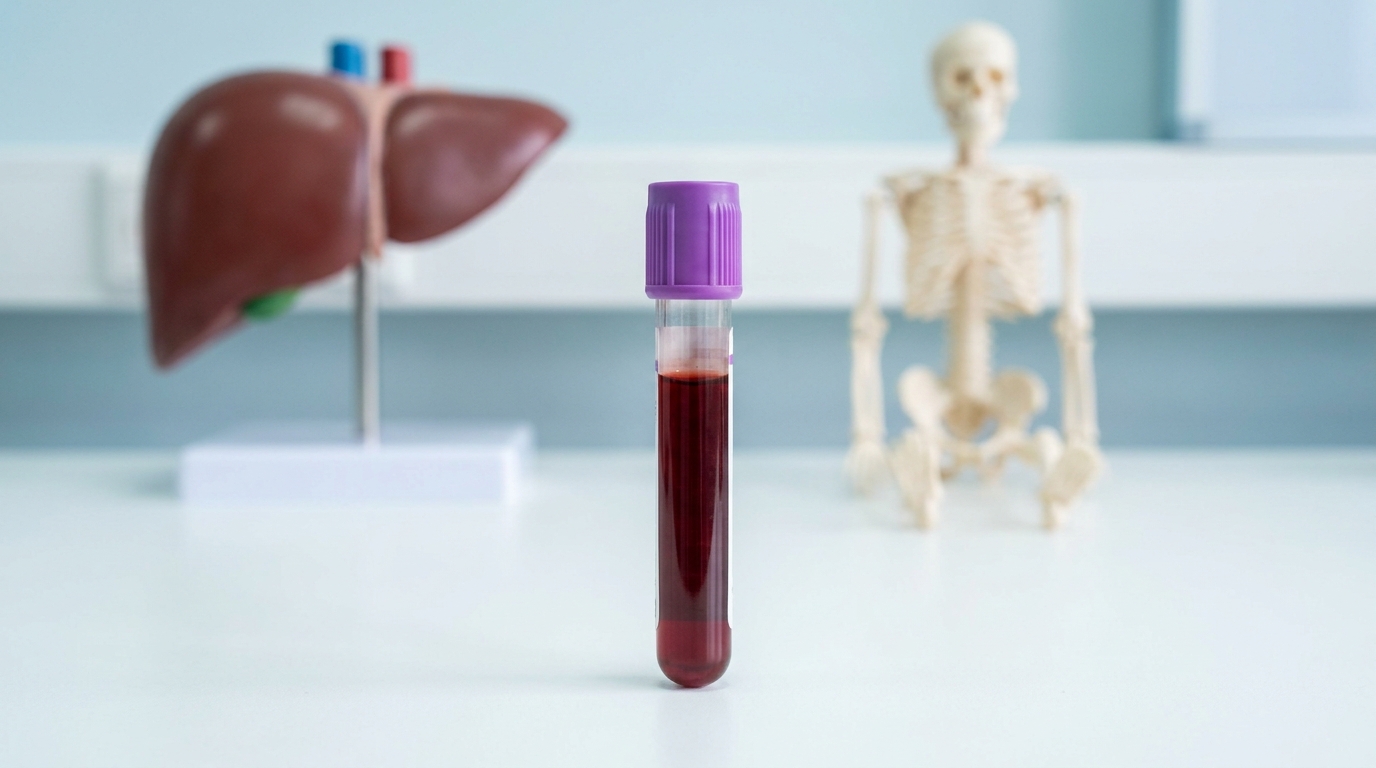
If your recent lab report shows an “ALP” value flagged as high or low, you’re not alone — alkaline phosphatase is one of the most commonly ordered blood markers, yet one of the least understood. Unlike a single-organ test, ALP gives a window into two very different systems at once: your liver and your bones. This guide breaks down what the alkaline phosphatase test measures, its normal range, what causes it to rise or fall, and how doctors figure out which organ is actually responsible.
What Is Alkaline Phosphatase (ALP)?
Alkaline phosphatase is an enzyme attached to the surface of cells in several tissues throughout the body. Its job is to remove phosphate groups from molecules — a process called dephosphorylation — which plays a role in things like bile transport in the liver and mineral deposition in bone.
The enzyme is produced in the largest amounts by two very different cell types:
- Cholangiocytes — cells lining the bile ducts in the liver
- Osteoblasts — bone-building cells responsible for laying down new bone tissue
Smaller amounts also come from the intestines, kidneys, and, during pregnancy, the placenta. Because ALP originates from more than one organ system, a raised level on its own doesn’t automatically tell your doctor where the problem is coming from — that ambiguity is actually the whole reason this test is usually interpreted together with others, which we’ll get to shortly.
The Four ALP Isoenzymes
Total ALP measured on a routine blood test is actually a combination of four distinct isoenzymes, each produced by a different tissue:
- Liver ALP — the most clinically relevant form for liver and bile duct disease
- Bone ALP — reflects osteoblast activity and bone turnover
- Intestinal ALP — a minor contributor in most people
- Placental ALP — present only during pregnancy
When a standard ALP result is unclear, doctors can order a more specific ALP isoenzyme test (or pair it with GGT, as explained below) to separate a liver-driven elevation from a bone-driven one without needing additional imaging right away.
Why Do Doctors Order an ALP Test?
An ALP blood test is typically included as part of a Liver Function Test (LFT) panel, but it’s also ordered independently when a doctor suspects a bone disorder. Common reasons for ordering it include:
- Investigating symptoms like jaundice, persistent itching, abdominal pain, or unexplained fatigue
- Following up on other abnormal liver enzymes found during routine screening
- Evaluating bone-related symptoms such as unexplained bone pain, deformity, or a suspected healing fracture
- Assessing bone conditions in older adults, including metabolic bone disease
- Monitoring certain medications known to affect liver or bone metabolism
- Part of a routine annual health check-up or pre-surgical screening
ALP Normal Range
Reference ranges vary slightly between laboratories depending on the testing method used, so always compare your result to the range printed on your own lab report. As a general guide:
| Group | Normal ALP Range (U/L) | Notes |
|---|---|---|
| Adult men | 44 – 147 U/L | May run slightly higher than women |
| Adult women | 44 – 147 U/L | Rises further in the third trimester if pregnant |
| Children (under 2 years) | Higher than adults | Rapid bone growth phase |
| Children & teenagers (growth spurt) | Can be 2–3x adult levels | Completely normal, reflects active bone formation |
| Pregnant women (3rd trimester) | Elevated above baseline | Due to placental ALP production |
| Older adults | Mild gradual rise possible | Related to natural bone remodeling changes |
Reference ranges may vary slightly between labs — see Cleveland
Clinic for additional context.
Factors That Can Affect Your ALP Result
Before assuming an abnormal result reflects disease, it’s worth knowing that several everyday factors can shift ALP levels without any underlying illness:
- Age — children, teenagers, and adolescents naturally run much higher due to bone growth
- Pregnancy — especially the third trimester
- Recent bone fracture — healing bone temporarily raises ALP
- Blood type — certain blood group secretors can show a mild, harmless rise after a fatty meal
- Smoking — has been associated with modest ALP changes in some studies
- Medications — oral contraceptives, certain antibiotics, and anticonvulsants can alter levels
- Recent surgery — particularly bone or biliary procedures
This is exactly why a single mildly abnormal ALP reading is rarely treated as an emergency — context matters.
What Does a High ALP Level Mean?
A high ALP result usually points toward one of two sources — the liver/bile ducts, or the bones. Doctors often order a GGT test alongside ALP specifically to figure out which one it is.
Liver and bile duct causes:

- Bile duct blockage (gallstones, strictures, or tumors compressing the duct)
- Hepatitis, whether viral or drug-induced
- Fatty liver disease
- Cirrhosis
- Primary liver tumors or cancer that has spread to the liver from elsewhere in the body
- Curious how much you know about these conditions? You can test your knowledge of liver-related diseases with our interactive quiz.
Bone-related causes:
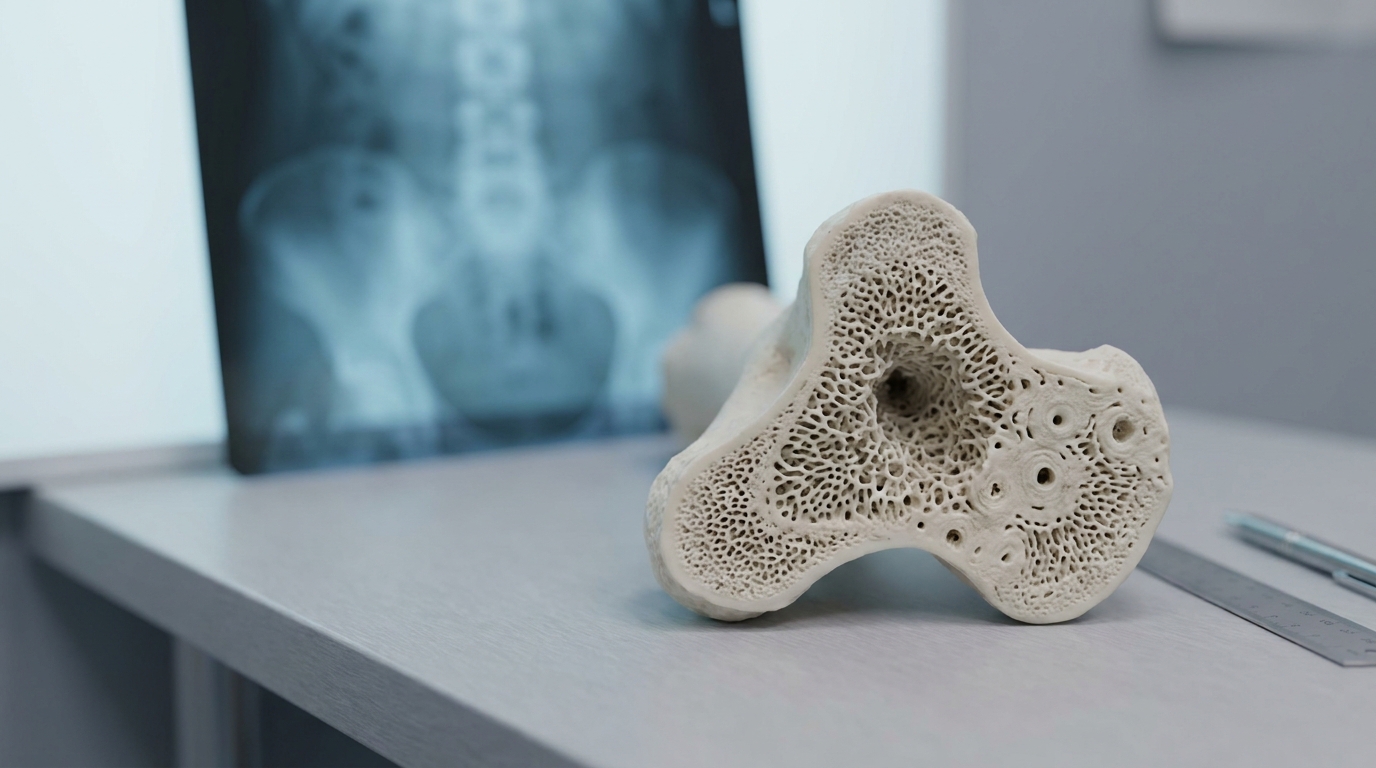
- Paget’s disease of bone
- A recently healing fracture
- Primary bone tumors or metastatic cancer that has spread to bone
- Osteomalacia (soft, weakened bones from poor mineralization) or rickets in children
- Overactive parathyroid glands (hyperparathyroidism)
Other possible causes:
- Normal pregnancy (third trimester)
- Heart failure
- Certain infections, including mononucleosis
- Kidney disease in some cases
What Does a Low ALP Level Mean?
Low ALP is less common and less frequently investigated than high ALP, but it isn’t automatically harmless. Possible causes include:
- Malnutrition or protein deficiency
- Zinc or magnesium deficiency, since ALP requires these minerals as cofactors
- An underactive thyroid (hypothyroidism)
- Wilson’s disease, a rare genetic condition affecting copper metabolism
- Hypophosphatasia, a rare inherited disorder of bone mineralization
- Certain medications, including some used for osteoporosis
ALP vs. GGT — Why They’re Tested Together
This is the single most useful thing to understand about an ALP result: ALP by itself cannot tell you whether the problem is in your liver or your bones. That’s where the GGT test becomes essential. GGT is found almost exclusively in the liver and bile ducts — not in bone — which makes it the perfect companion marker.
| Result Pattern | Likely Source |
|---|---|
| High ALP + High GGT | Liver or bile duct origin |
| High ALP + Normal GGT | Bone-related origin (liver less likely) |
| Normal ALP + High GGT | Early liver stress, or non-liver causes like alcohol use |
If you haven’t already, it’s worth reading our detailed breakdown of the companion test here: GGT Test Explained: Normal Range, What High or Low Levels Mean for Your Liver — together, the two tests give a much clearer picture than either one alone.
What Happens After an Abnormal ALP Result?

An abnormal ALP reading is a starting point, not a diagnosis. The typical next steps look like this:
- Repeat the test — a single mildly elevated result is often rechecked after a few weeks, since values can fluctuate
- Add companion tests — GGT, ALT, AST, calcium, phosphate, and vitamin D are commonly added to narrow down the source
- Consider an ALP isoenzyme test — if it’s still unclear whether the elevation is bone or liver related
- Imaging if needed — an abdominal ultrasound for suspected liver/bile duct issues, or an X-ray/bone scan for suspected bone conditions
- Specialist referral — a hepatologist for persistent liver-pattern results, or an endocrinologist/orthopedic specialist for bone-pattern results
How to Prepare for the ALP Test
No special preparation is usually required for a standalone ALP test, though your doctor may ask you to fast for several hours beforehand if it’s being drawn as part of a broader metabolic or lipid panel. It’s a good idea to mention any medications or supplements you’re taking beforehand, since several can influence ALP readings and your doctor may want to account for that when interpreting your result.
What to Expect During the Test

The ALP test uses a standard blood draw:
- A healthcare professional ties a band around your upper arm and cleans the skin over a vein, usually in the inner elbow
- A needle is inserted to collect a small blood sample into a vial
- The needle is removed and light pressure is applied to the site
- The whole process typically takes under five minutes, and results are generally available within a day or two
Risks are minimal — mild bruising, brief discomfort, or slight bleeding at the puncture site, all of which resolve quickly.
Frequently Asked Questions
Is a slightly high ALP level dangerous?
Not necessarily. Mild elevations are common and can be caused by harmless factors like a recent fracture healing, normal pregnancy, or being a growing teenager. Persistent or significantly high results warrant further evaluation.
Can ALP be high even if the liver is completely healthy?
Yes. Since ALP also comes from bone, a healthy liver with active bone turnover — such as in a growing teenager — can show high ALP with no liver problem at all.
What other tests are usually done alongside ALP?
GGT, ALT, AST, and bilirubin are commonly ordered together to build a complete liver function picture. Calcium and phosphate are often added when a bone cause is suspected.
Should I be worried about a low ALP result?
Low ALP is rare and usually only becomes clinically significant when it’s very low or accompanied by other symptoms. Your doctor will guide you on whether further testing, such as a zinc level check, is needed.
Does fasting affect ALP results?
Fasting isn’t usually required for ALP alone, but if it’s part of a larger panel that does require fasting, following those instructions ensures the most accurate combined results.
Can children have naturally high ALP?
Yes, and this is completely normal. Children and teenagers going through growth spurts can show ALP levels two to three times higher than adult ranges purely due to active bone formation.
How often should ALP be retested if it’s abnormal?
This depends on how abnormal the result is and the suspected cause — your doctor may recheck it in a few weeks for a mild elevation, or sooner if symptoms are present.
Alkaline Phosphatase (ALP) Test Knowledge Quiz
Available options: 1 to 20
Final Word
An ALP test result rarely stands on its own — it’s one piece of a larger diagnostic puzzle that usually includes GGT and other liver or bone-related markers. If your ALP is flagged outside the normal range, don’t self-diagnose from a single number; discuss the full panel with your doctor, who can weigh your age, symptoms, and other results together.
This article is for educational purposes only and is not a substitute for professional medical advice, diagnosis, or treatment.