


The alkaline phosphatase (ALP) blood test is a common laboratory test used to evaluate liver, bile duct, and bone health. It measures the amount of alkaline phosphatase, an enzyme found throughout the body, particularly in the liver, bones, kidneys, and digestive system.
High ALP levels may indicate liver disease, bile duct obstruction, or certain bone conditions. Low ALP levels are less common and may be associated with nutritional deficiencies, thyroid disorders, or rare genetic conditions.
Understanding your ALP blood test results can help you recognize what an abnormal level may mean and why additional testing might be necessary.
This guide explains the ALP blood test, normal ranges, causes of high and low levels, its relationship with other liver enzymes, and how doctors interpret abnormal results.
What Is Alkaline Phosphatase (ALP)?
Alkaline phosphatase (ALP) is an enzyme that helps break down proteins and supports several important processes in the body, including bone development and normal bile flow.

The enzyme is present in multiple tissues, but the main sources of ALP in the bloodstream are:
- Liver
- Bile ducts
- Bones
- Intestines
- Placenta during pregnancy
The liver and bones contribute most significantly to circulating ALP levels.
When liver cells or bile ducts are affected, ALP can enter the bloodstream in increased amounts. Similarly, conditions that increase bone formation or turnover may cause higher ALP levels.
An ALP blood test measures the total amount of this enzyme in a blood sample. However, it cannot identify the exact source of an abnormal result by itself.
Why Is an ALP Blood Test Done?
Doctors may order an ALP blood test as part of a routine health assessment or when investigating possible liver or bone problems.
The test is commonly included in a liver function test (LFT) or comprehensive metabolic panel (CMP).
An ALP test may be recommended to:
- Investigate unexplained elevations in liver enzymes.
- Evaluate possible bile duct obstruction.
- Assess suspected liver disease.
- Investigate bone pain or certain bone disorders.
- Monitor patients with known liver or bone conditions.
- Help evaluate abnormal results from previous blood tests.
Doctors usually interpret ALP alongside other laboratory results, medical history, and symptoms.
Alkaline Phosphatase (ALP) Normal Range
The normal alkaline phosphatase range varies depending on age, sex, laboratory methods, and the reference intervals used by individual laboratories.
For adults, commonly reported reference ranges include approximately 40–129 U/L or 44–147 U/L.
Some laboratories use different reference intervals, so the range printed on your laboratory report is the most important one when interpreting your result.
ALP Normal Range in Adults
| Group | Example Reference Range |
|---|---|
| Adult males | 40–129 U/L |
| Adult females | 35–104 U/L |
| General adult reference (some laboratories) | 44–147 U/L |
These are examples from different laboratory references, not interchangeable universal limits.

ALP Levels in Children and Teenagers
Children and teenagers may naturally have higher ALP levels than adults because their bones are actively growing.
During puberty, increased bone formation can cause ALP levels to rise without indicating liver disease.
For this reason, pediatric reference ranges are different from adult ranges and should always be used when evaluating younger patients.
ALP Levels During Pregnancy
ALP levels may increase during pregnancy because the placenta produces an additional form of alkaline phosphatase.
A higher result during pregnancy does not automatically indicate liver disease. Doctors interpret it alongside pregnancy-related symptoms and other liver tests.
What Does a High ALP Level Mean?
A high alkaline phosphatase level means that the amount of ALP in the bloodstream is above the laboratory’s reference range.
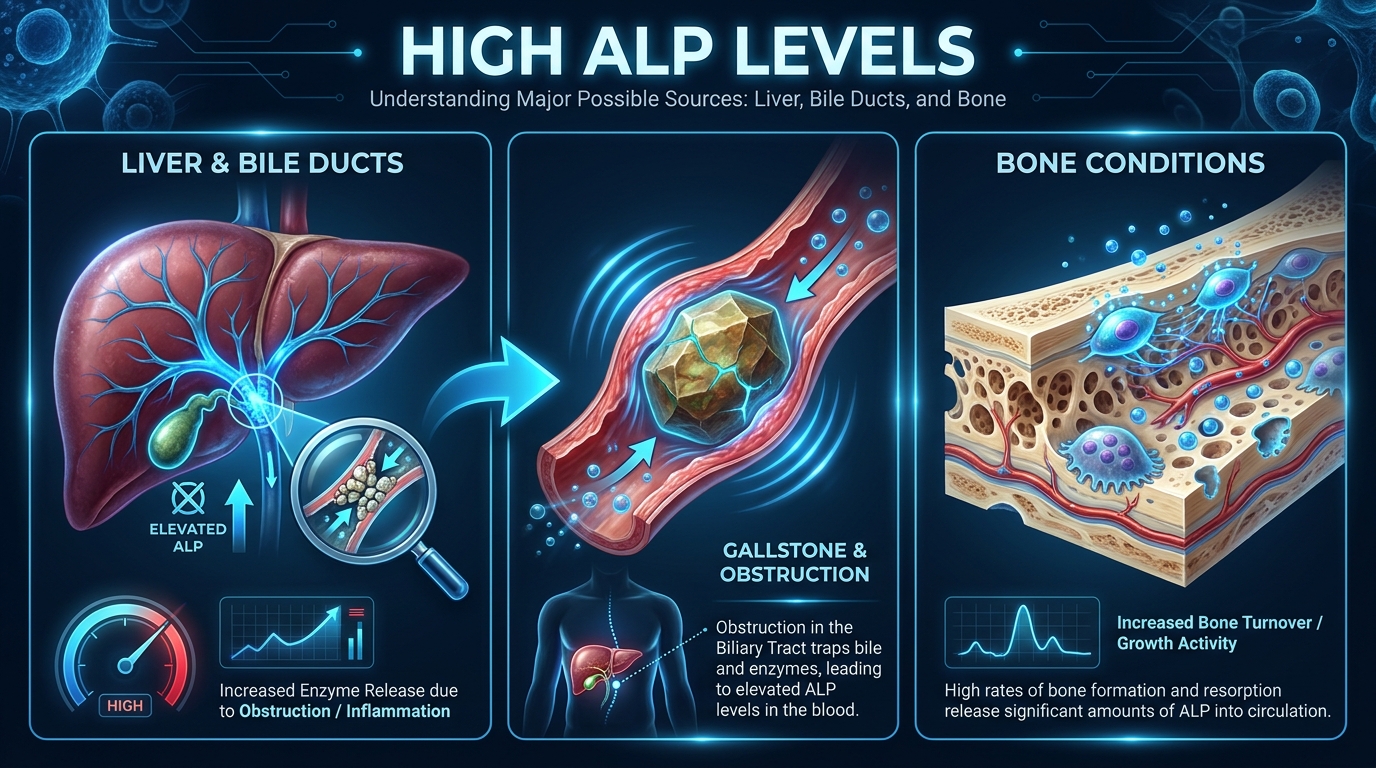
It may indicate increased activity or damage involving the liver, bile ducts, or bones.
However, an elevated ALP result does not automatically mean that someone has a serious medical condition.
The most important step is determining where the increased enzyme is coming from.
1. Liver Disease
Liver conditions can increase ALP levels, particularly when bile flow is affected.
Possible liver-related causes include:
- Hepatitis
- Liver cirrhosis
- Certain forms of liver inflammation
- Liver tumors
- Medication-related liver injury
Other liver enzymes, including ALT and AST, help doctors understand the overall pattern of liver abnormalities.
2. Bile Duct Obstruction
Bile is a digestive fluid produced by the liver and transported through bile ducts.
When bile flow becomes blocked or restricted, ALP levels may increase significantly.
Possible causes include:
- Gallstones blocking a bile duct.
- Narrowing of the bile ducts.
- Inflammation of the bile ducts.
- Certain pancreatic or biliary conditions.
Bile duct problems may also cause jaundice, dark urine, pale stools, and itching.
3. Bone Disorders
ALP is also produced by bone-forming cells called osteoblasts.
Conditions that increase bone formation or remodeling can lead to elevated ALP levels.
Examples include:
- Paget disease of bone.
- Osteomalacia.
- Certain bone tumors.
- Healing fractures.
- Hyperparathyroidism.
If ALP is elevated while other liver tests remain normal, doctors may investigate a bone-related source.
4. Pregnancy and Normal Bone Growth
Pregnancy can increase ALP because of placental enzyme production.
Similarly, growing children and teenagers may have higher ALP levels due to normal bone development.
These situations must be interpreted using age-appropriate or pregnancy-specific clinical context.
5. Other Possible Causes
Some additional conditions may be associated with increased ALP, including:
- Certain intestinal conditions.
- Hyperthyroidism.
- Some infections.
- Certain cancers affecting bone or liver.
The significance of an elevated result depends on its degree, persistence, and the patient’s overall clinical picture.
What Does a Low ALP Level Mean?
Low alkaline phosphatase levels are less common than elevated levels.
A result below the laboratory’s reference range may sometimes be associated with nutritional deficiencies, metabolic conditions, or uncommon genetic disorders.
Possible causes include:
1. Zinc Deficiency
Zinc is an essential mineral involved in several enzyme functions, including alkaline phosphatase activity.
Insufficient zinc levels may contribute to reduced ALP activity.
2. Protein Deficiency and Malnutrition
Inadequate nutrition or protein deficiency may be associated with lower ALP levels.
Doctors may consider dietary history and other nutritional tests when investigating persistently low results.
3. Hypothyroidism
Hypothyroidism occurs when the thyroid gland does not produce enough thyroid hormones.
In some individuals, reduced thyroid activity may be associated with lower ALP levels.
4. Hypophosphatasia
Hypophosphatasia is a rare inherited metabolic disorder that affects bone and tooth mineralization.
Persistently low ALP is an important laboratory finding in this condition, although additional clinical and laboratory investigations are needed to establish a diagnosis.
5. Other Possible Causes
Other conditions associated with low ALP may include:
- Wilson disease.
- Pernicious anemia.
- Magnesium deficiency.
- Certain nutritional disorders.
A single low result does not establish a diagnosis. Persistent abnormalities may require repeat testing and further evaluation.
ALP and GGT: What Is the Difference?
Both alkaline phosphatase (ALP) and gamma-glutamyl transferase (GGT) are commonly used when evaluating liver and bile duct conditions.
However, they provide different information.
| Feature | ALP | GGT |
|---|---|---|
| Full name | Alkaline phosphatase | Gamma-glutamyl transferase |
| Main sources | Liver and bones | Mainly liver and bile ducts |
| High levels may indicate | Liver or bone conditions | Liver or bile duct conditions |
| Main clinical use | Investigating liver and bone abnormalities | Helping identify a liver-related source of elevated ALP |

What Does High ALP With High GGT Mean?
When both ALP and GGT are elevated, a liver or bile duct source becomes more likely.
Doctors may investigate possible bile duct obstruction, cholestasis, or other liver conditions.
Additional tests or imaging may be necessary depending on the clinical findings.
What Does High ALP With Normal GGT Mean?
When ALP is elevated but GGT remains within the normal range, a bone-related source may be considered.
However, this pattern does not prove that the abnormality comes from the bones.
Further evaluation, including ALP isoenzyme testing when appropriate, may help identify the source.
ALP Levels and Other Liver Enzymes
ALP is commonly interpreted alongside other liver-related blood tests, including:
- ALT (alanine aminotransferase).
- AST (aspartate aminotransferase).
- GGT (gamma-glutamyl transferase).
- Bilirubin.
- Albumin.
Each marker provides different information.
ALT and AST are commonly used to assess patterns of liver cell injury, while ALP and GGT help evaluate possible bile duct involvement.
Bilirubin provides information about how the body processes and eliminates a breakdown product of red blood cells.
Doctors may also review the AST/ALT ratio to understand the pattern of enzyme elevations in certain clinical situations.
No single marker can provide a complete assessment of liver health.
How Is the ALP Blood Test Performed?
An ALP blood test is performed using a blood sample collected from a vein, usually in the arm.
The procedure generally involves the following steps:
- A healthcare professional cleans the area where the blood will be collected.
- A small needle is inserted into a vein.
- Blood is collected into a laboratory tube.
- The sample is sent to a laboratory for analysis.
- The results are reported in units per liter (U/L).
The test itself usually takes only a few minutes.
Do You Need to Fast Before an ALP Test?
Fasting is not always required for an isolated ALP test.
However, your healthcare provider may request fasting if the ALP test is part of a larger blood panel or if other tests require it.
Follow the specific preparation instructions provided by your laboratory or healthcare professional.
Also, inform your healthcare provider about medicines and supplements you take. Do not stop prescribed medication without medical advice.
What Happens If Your ALP Level Is High?
The next step depends on how high the result is and whether other tests are abnormal.
A healthcare professional may recommend:
- Repeating the ALP test to confirm the finding.
- Checking ALT, AST, GGT, and bilirubin.
- Reviewing medications and supplements.
- Assessing calcium, phosphate, and vitamin D when bone disease is suspected.
- Ordering ALP isoenzyme testing.
- Performing an ultrasound or other imaging if a liver or bile duct problem is suspected.
The appropriate investigation depends on the suspected cause.
There is no single treatment that lowers ALP in every situation. Treatment focuses on the underlying condition rather than the laboratory number alone.
When Should You Be Concerned About ALP Results?
An abnormal ALP result should be interpreted in context rather than in isolation.
Medical assessment is particularly important when an abnormal result occurs alongside symptoms such as:
- Yellowing of the skin or eyes.
- Dark urine or unusually pale stools.
- Persistent itching.
- Unexplained abdominal pain.
- Persistent bone or joint pain.
- Recurrent fractures.
- Unexplained fatigue.
Severe abdominal pain, fever with jaundice, or rapidly worsening symptoms require prompt medical evaluation.
If your ALP result is outside the reference range, discuss it with a healthcare professional who can interpret it alongside your other results.
Frequently Asked Questions About the ALP Blood Test
1. What is the normal ALP level in adults?
Common adult reference ranges include approximately 40–129 U/L or 44–147 U/L, depending on the laboratory. Always check the reference range printed on your report.
2. What does an ALP level of 150 mean?
An ALP level of 150 U/L may be slightly above the upper reference limit in some laboratories. However, it may fall within the reference interval of others. Age, sex, pregnancy status, symptoms, and other test results are important for interpretation.
3. Is high ALP always a sign of liver disease?
No. High ALP may originate from the liver, bile ducts, or bones. Pregnancy and normal childhood growth can also increase ALP.
4. Can vitamin D deficiency increase ALP?
Yes. Vitamin D deficiency can contribute to osteomalacia, a condition involving impaired bone mineralization, and may be associated with elevated ALP.
5. What does high ALP with normal ALT and AST mean?
This pattern may occur with bile duct conditions or bone-related disorders. GGT, bilirubin, symptoms, and additional investigations can help determine the source.
6. Can pregnancy increase ALP levels?
Yes. The placenta produces alkaline phosphatase, so ALP levels may rise during pregnancy. Pregnancy-specific clinical interpretation is important.
7. Is low alkaline phosphatase dangerous?
Not necessarily. A mildly low result may have several explanations. Persistently low ALP, particularly with relevant symptoms, may require investigation for nutritional, metabolic, or genetic conditions.
8. Which test helps identify the source of high ALP?
An ALP isoenzyme test can help distinguish liver-derived ALP from bone-derived ALP. GGT and other liver tests can also help guide further evaluation.
Final Thoughts
The alkaline phosphatase (ALP) blood test is an important laboratory tool for evaluating possible liver, bile duct, and bone conditions.
High ALP levels may be associated with liver disease, bile duct obstruction, bone disorders, pregnancy, or normal growth. Low ALP levels may be linked to nutritional deficiencies, thyroid disorders, or rare inherited conditions.
Because ALP can originate from different tissues, an abnormal result should never be interpreted on its own.
Doctors consider the patient’s age, medical history, symptoms, laboratory reference range, and other test results before deciding whether further investigation or treatment is needed.
If your ALP level is abnormal, consult a qualified healthcare professional to understand what your result means.
Medical Disclaimer: This article is for educational and informational purposes only. It is not a substitute for professional medical advice, diagnosis, or treatment. Always consult a qualified healthcare professional for interpretation of laboratory results and medical concerns.
Medical References:
- MedlinePlus – Alkaline Phosphatase: https://medlineplus.gov/lab-tests/alkaline-phosphatase/
- Mayo Clinic – Alkaline Phosphatase (ALP) Blood Test: https://www.mayoclinic.org/tests-procedures/alkaline-phosphatase-alp-blood-test/about/pac-20587036
- Cleveland Clinic – Alkaline Phosphatase (ALP): https://my.clevelandclinic.org/health/diagnostics/22029-alkaline-phosphatase-alp