Biomolecules are organic compounds that form the foundation of all living organisms. Among the most essential biomolecules are proteins and lipids, which play vital roles in maintaining life processes. The study of biomolecules proteins and lipids helps us understand how cells function, grow, and survive. These biomolecules are involved in metabolism, structure, energy storage, and regulation of biological activities.
This article provides a detailed explanation of biomolecules proteins and lipids, focusing on their structure, classification, functions, and biological significance.
Quiz
Available options: 1 to 20
Proteins as Essential Biomolecules
Proteins are complex biomolecules composed of amino acids linked together by peptide bonds. They are nitrogen-containing compounds and are considered the most versatile biomolecules in living systems. The role of biomolecules proteins and lipids is especially prominent in cellular structure and enzymatic activity.
Structure of Proteins
Proteins have four levels of structural organization:
- Primary Structure – Linear sequence of amino acids
- Secondary Structure – Alpha-helices and beta-pleated sheets
- Tertiary Structure – Three-dimensional folding
- Quaternary Structure – Association of multiple polypeptide chains
The structure of proteins determines their specific biological function, making biomolecules proteins and lipids crucial for cellular specialization.
Types of Proteins
Proteins are classified into different types based on function:
- Enzymatic proteins – Catalyze biochemical reactions
- Structural proteins – Provide support (e.g., collagen, keratin)
- Transport proteins – Carry substances (e.g., hemoglobin)
- Hormonal proteins – Regulate body processes
- Defensive proteins – Protect against pathogens
Functions of Proteins
Proteins perform a wide range of biological functions:
- Act as enzymes to speed up metabolic reactions
- Provide structural support to cells and tissues
- Help in growth and repair of body tissues
- Regulate physiological processes
- Participate in immune defense
Thus, biomolecules proteins and lipids are indispensable for sustaining life.
Lipids as Important Biomolecules
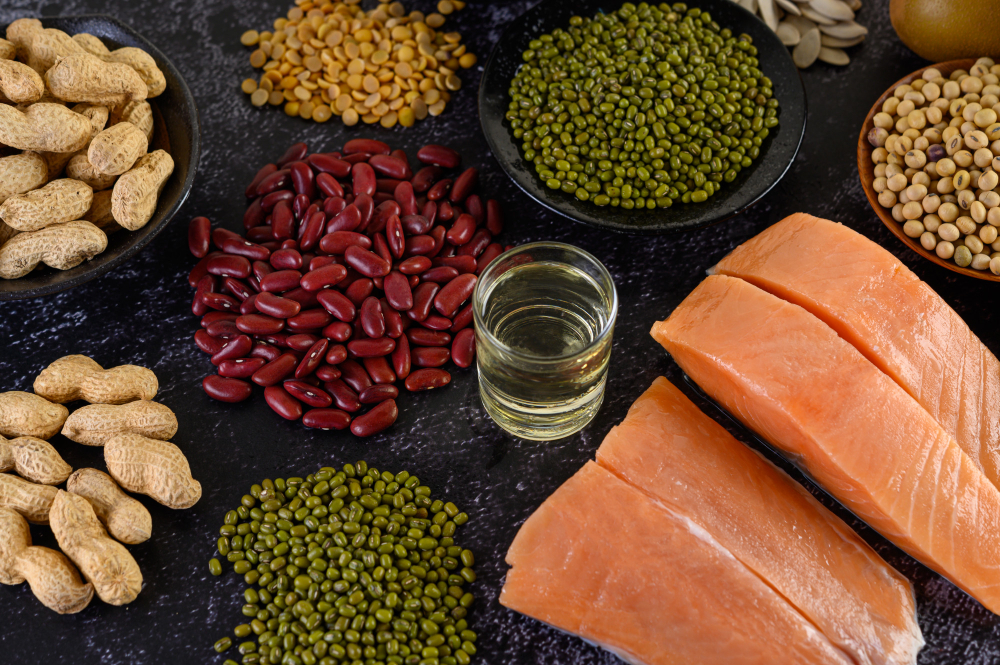
Lipids are hydrophobic biomolecules composed mainly of carbon, hydrogen, and oxygen. Unlike proteins, lipids are insoluble in water but soluble in organic solvents. The study of biomolecules proteins and lipids highlights lipids as major energy-rich compounds.
Types of Lipids
Lipids are classified into several groups:
- Simple lipids – Fats and oils
- Compound lipids – Phospholipids and glycolipids
- Derived lipids – Steroids and waxes
Each type plays a unique role in cellular organization and metabolism.
Functions of Lipids
Lipids perform multiple essential functions:
- Serve as a major source of stored energy
- Form structural components of cell membranes
- Provide insulation and protection
- Act as signaling molecules (hormones)
- Help in absorption of fat-soluble vitamins
The combined role of biomolecules proteins and lipids ensures proper cellular functioning and energy balance.
Importance of Proteins and Lipids in Living Organisms
The biological importance of biomolecules proteins and lipids cannot be overstated. Proteins regulate nearly all biochemical reactions, while lipids store energy and maintain membrane integrity. Together, they support metabolism, homeostasis, and adaptation in living organisms.
Deficiency or imbalance of proteins and lipids can lead to severe health problems, highlighting their critical role in nutrition and physiology.
Conclusion
In conclusion, biomolecules proteins and lipids are fundamental components of life. Proteins provide structure, regulation, and catalysis, whereas lipids store energy and form cellular barriers. A clear understanding of these biomolecules is essential for students of higher biology, biotechnology, and medical sciences.