Almost every parent gets a surprise in the first week: the baby weighs less than at birth. That drop is expected, but many parents are not sure how much is normal, when it should stop, and when to ask for help. In this guide you will learn how to calculate your baby’s weight loss, what is normal in the first week, when babies usually regain their birth weight, and the signs that need medical advice.
Why Do Newborns Lose Weight After Birth?
Newborn weight loss in the first days is physiological, which means it is a normal part of adapting to life outside the womb. According to the NHS Scotland guide on weighing babies, babies are born with extra fluid in their body that they pass out in the first days. Milk intake starts small and increases as the mother’s milk supply increases, so weight dips before it climbs back up.
Newborn Weight Loss Percentage Formula
% Weight Loss = (Birth Weight − Current Weight) ÷ Birth Weight × 100
You can use any unit, but use the same unit for both weights. You can also try our calculator below.
Newborn Weight Loss Calculator
% Weight Loss = (Birth Weight − Current Weight) ÷ Birth Weight × 100
Educational tool only. It does not diagnose any condition and does not replace a midwife’s or doctor’s assessment. Always read weight together with feeding, wet nappies, stools and how your baby looks. If you are worried about your baby, contact your midwife or doctor today.
Worked Examples
Example 1: Typical. Birth weight 3,200 g, weight on day 3 is 3,000 g.
Loss = 200 g. 200 ÷ 3,200 × 100 = 6.3%.
Example 2: At the 10% mark. Birth weight 2,800 g, weight on day 4 is 2,520 g.
Loss = 280 g. 280 ÷ 2,800 × 100 = 10%.
Example 3: Needs prompt assessment. Birth weight 3,500 g, weight on day 5 is 3,000 g.
Loss = 500 g. 500 ÷ 3,500 × 100 = 14.3%.
Quick Reference: How Many Grams Is 7%, 10% and 12%?
| Birth weight | 7% loss | 10% loss | 12% loss |
|---|---|---|---|
| 2,500 g | 175 g | 250 g | 300 g |
| 3,000 g | 210 g | 300 g | 360 g |
| 3,500 g | 245 g | 350 g | 420 g |
| 4,000 g | 280 g | 400 g | 480 g |
These are simple percentage calculations to help you read a weight, not diagnostic cut-offs.
How Much Weight Loss Is Normal for a Newborn?
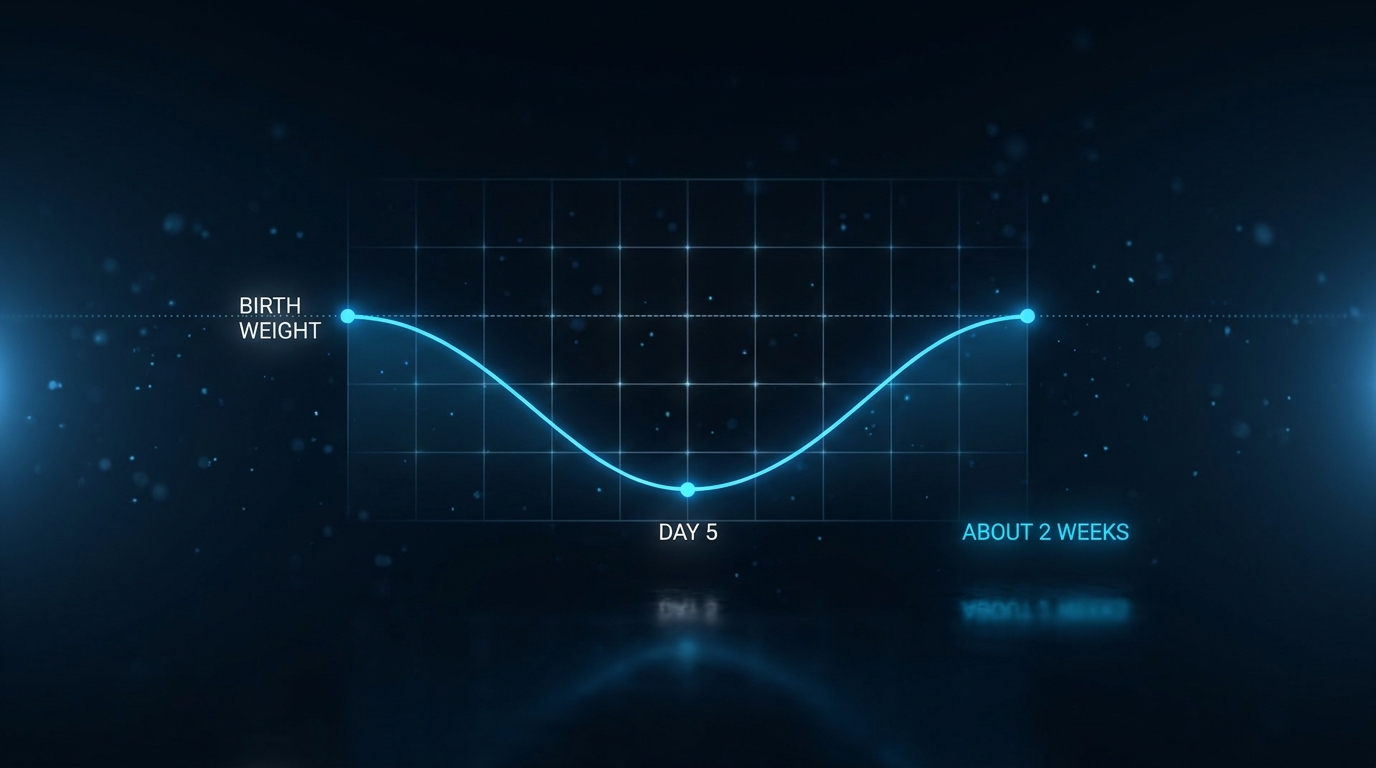
You will read “up to 10% is normal” in many places. The Western Australia women’s hospital leaflet states that it is normal for a breastfed newborn to lose up to 10% of birth weight in the first 72 to 96 hours, and that most babies are back to birth weight by about two weeks.
The NHS Scotland guide adds an important point: the 10% figure is the traditional expectation, but it was never based on strong evidence. More recent studies suggest that a loss of about 5 to 7% is more likely to be typical for most babies, and a smaller group of babies are more vulnerable to greater loss. A study indexed on PubMed Central concluded that newborn weight loss is brief, with few children remaining more than 10% below birth weight after five days, and that standard growth charts can be misleading in the first two weeks. The NICE faltering growth guideline also includes an evidence review on the normal limits of maximal weight loss in the first two weeks.
What Do Hospitals Usually Do at Different Levels?
The NHS Scotland guide describes how one hospital team approaches different amounts of loss. This is a local hospital protocol, not a universal rule, but it shows how clinicians think:
| Weight loss | What the guide describes |
|---|---|
| About 8 to 10% | The baby is generally well, but a careful feeding assessment is advised and the baby is usually weighed again in about 48 hours |
| Above 10 to 12% | The baby should be assessed (colour, tone, temperature, wet and dirty nappies), medical advice is sought if nappy output is not appropriate, and the baby is reweighed in about 24 hours |
| Above 12% | Uncommon. The baby needs assessment by midwifery and paediatric teams, including a check for dehydration |
When Should the Weight Stop Dropping and Start Rising?
The timing matters as much as the percentage.
- A baby should not continue to lose weight after day 5, according to NHS Scotland.
- Most babies regain their birth weight by about 2 weeks. The same guide describes 14 to 21 days for healthy feeding babies, so some take up to 3 weeks.
- After that, the Western Australia leaflet says breastfed babies gain on average at least 150 to 200 g per week in the first three months.
If your baby is still below birth weight after the first week, or is still losing after day 5, speak to your midwife or doctor.
Is Your Baby Getting Enough Milk? The Nappy Chart
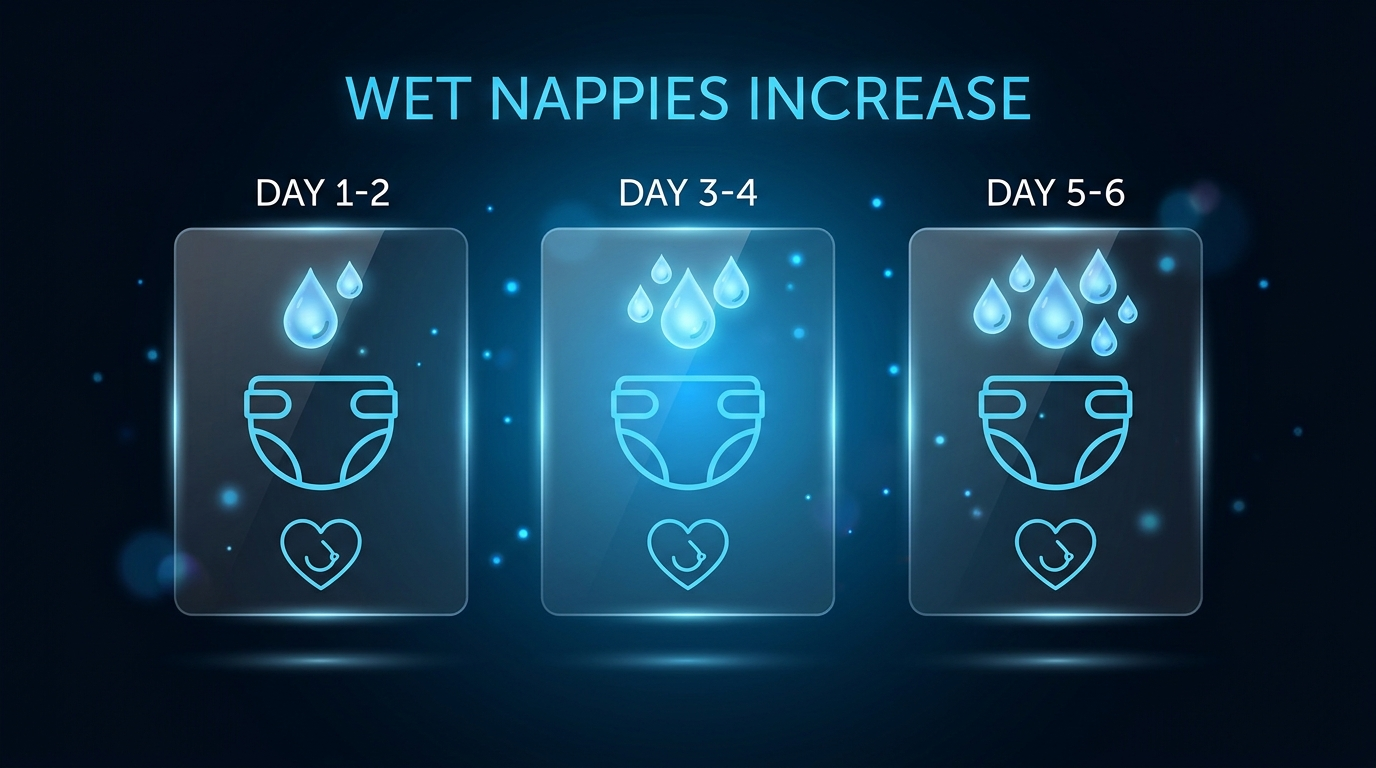
Weight is only one clue. The NHS Scotland guide also lists what to expect in nappies and feeds:
| Baby’s age | Wet nappies | Stools | Feeds |
|---|---|---|---|
| Day 1 to 2 | 1 to 2 wet nappies | Dark sticky meconium | Frequent feeds |
| Day 3 to 4 | At least 3 heavier wet nappies | At least 2, changing to green or yellow | At least 8 feeds |
| Day 5 to 6 | 5 to 6 heavy wet nappies | At least 2 soft, yellow, seedy stools | At least 8 feeds |
| Day 6 onwards | At least 6 heavy wet nappies | Soft yellow stools | About 8 to 12 feeds in 24 hours |
The Western Australia leaflet also describes a well-fed baby as one who is settled after most feeds, has 5 or more wet nappies from days 5 to 6, and passes soft yellow stools at least two to three times a day. Infrequent stools can be one of the first signs of low milk intake.
Nappy colours and numbers vary slightly between guides, so follow the advice your own midwife gives you.
Which Babies Are More Likely to Lose More Weight?
The NHS Scotland guide lists risk factors for excessive weight loss in breastfed babies, including:
- Baby factors: caesarean or instrumental birth, preterm birth (before 37 weeks), growth restriction, and fewer wet or dirty nappies than expected
- Feeding factors: difficulty attaching or latching, a sleepy baby, excessive jaundice
- Mother-related factors: breast surgery, nipple problems, and conditions that can affect milk supply
The Western Australia leaflet also mentions that conditions such as heavy bleeding after birth, retained placenta, polycystic ovary syndrome, diabetes or thyroid problems can affect milk supply. If any of these apply to you, tell your midwife early. (For gestational age, you can read our Ballard score guide.)
What Can Help If Weight Loss Is Greater Than Expected?
If your midwife or doctor is concerned, the plan is usually based on feeding:
- a check of attachment and feeding technique
- feeding 8 to 12 times in 24 hours, including night feeds, and responding to early feeding cues
- skin-to-skin contact
- expressing breast milk, and giving expressed milk or formula if your health professional advises it
- repeating the weight at the interval they recommend
Please do not start formula, water or other measures on your own without advice. The goal is to support feeding, and every plan should be individual.
Signs of Dehydration and When to Get Help
In babies who lose too much weight, the main concern is dehydration. The NHS Scotland guide notes that severe dehydration can raise sodium levels in the blood and cause lethargy, irritability and reduced urine and stool.
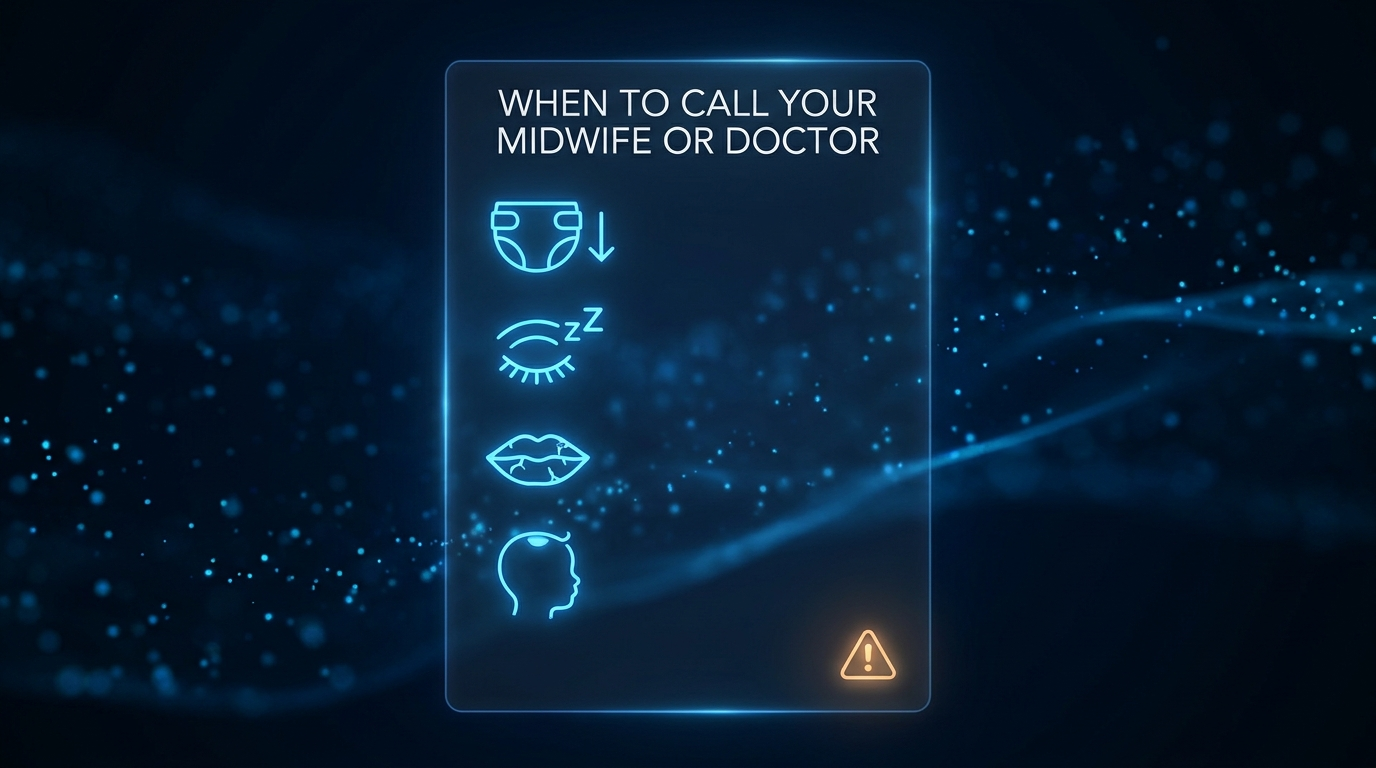
Contact your midwife or doctor the same day if your baby:
- has fewer wet or dirty nappies than expected for their age
- loses more than about 10% of birth weight, or is still losing after day 5
- is very sleepy, hard to wake for feeds, or very irritable
- has a dry mouth, or a sunken soft spot (fontanelle)
- is yellow (jaundiced) and feeding poorly
Seek urgent medical help if your baby is limp, very drowsy, not feeding or has trouble breathing. Hospital teams use careful fluid calculations in sick babies, for example the 4-2-1 rule for maintenance fluids, but this is a doctor’s decision and not something to do at home.
How Often Should a Newborn Be Weighed?
The NHS Scotland guide describes weighing babies at risk of poor feeding around 72 hours and again on day 5 to 6, while many healthy babies are weighed around day 5 to 6, depending on local routine. Frequent home weighing can cause unnecessary worry because scales vary, so follow your midwife’s schedule and weigh on the same scale when you can.
Newborn Weight Loss in Formula-Fed Babies
Formula-fed babies also lose some weight in the first days, but they often lose less and regain more quickly. The same signs apply: a baby should start gaining rather than losing after about day 5, and wet and dirty nappies matter. Always follow the preparation and feeding instructions of your formula.
Other Newborn Checks
Newborn weight is only one part of early assessment. See our guides on the Apgar score, which describes how a newborn is assessed at birth, and on baby growth and development at one month.
Key Takeaways
- Newborn weight loss in the first days is normal and caused by passing extra fluid and low initial milk intake.
- Many sources say up to 10% is expected, but this is a traditional figure, and recent studies suggest 5 to 7% is more typical.
- A baby should stop losing weight after day 5 and should regain birth weight by about 2 weeks (some take up to 3 weeks).
- Wet nappies, stools and feeding behaviour matter as much as the scale.
- Losses above 10% need assessment, and above 12% are uncommon and need medical review.
- Contact your midwife or doctor the same day if you are worried.
Conclusion
Seeing a lower number on the scale in the first week can be frightening, but for most babies it is part of normal adaptation. Learn the formula, track feeds and wet nappies, and ask for a feeding assessment early if the weight is dropping more than expected. When in doubt, contact your midwife or doctor, because early support makes a big difference.
Frequently Asked Questions
How much weight loss is normal for a newborn?
Many sources say up to 10% of birth weight in the first few days, but recent evidence suggests that 5 to 7% is more typical for most babies. A baby should not keep losing weight after day 5.
When do newborns regain their birth weight?
Most babies are back to birth weight by about 2 weeks. Some take up to 3 weeks.
How do I calculate newborn weight loss percentage?
Subtract the current weight from the birth weight, divide by the birth weight and multiply by 100.
Is 10% weight loss in a newborn normal?
A loss close to 10% can occur in the first days, but at this level a feeding assessment is usually advised, and a loss above 10% needs assessment by a midwife or doctor.
Why is my breastfed baby losing weight?
Weight loss is normal in the first days, but a larger loss can be due to feeding or attachment difficulties, a sleepy baby or other factors. Ask for a feeding assessment.
How many wet nappies should a newborn have?
By days 5 to 6, at least 5 to 6 heavy wet nappies a day, according to NHS Scotland guidance. Follow your midwife’s advice.
When should I call the doctor?
If your baby has fewer wet or dirty nappies, is very sleepy or irritable, has a dry mouth or sunken soft spot, is still losing weight after day 5, or has lost more than about 10%.
Disclaimer: This article is for educational purposes only and is not a substitute for professional medical advice, diagnosis or treatment. If you are worried about your baby, contact your midwife or doctor immediately. This article is not written for premature or sick babies, who have their own feeding and weight plans.
References
- NHS Scotland (Right Decisions). Weighing babies: guidance on newborn weight loss and feeding. June 2020.
- King Edward Memorial Hospital for Women, Western Australia. Weight loss and your newborn baby: patient information.
- Neonatal weight loss in breast and formula fed infants. Indexed on PubMed Central (PMC1721692).
- National Institute for Health and Care Excellence. Faltering growth: recognition and management of faltering growth in children (evidence review). NBK536449.