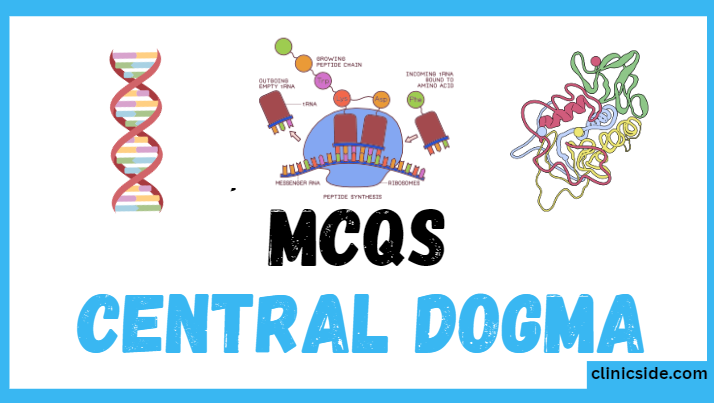
The Central Dogma of Molecular Biology is one of the most fundamental concepts in biology. It explains how genetic information flows within a biological system, guiding how cells function, grow, and reproduce. This concept forms the backbone of genetics, biotechnology, medicine, and modern molecular biology.
Understanding the Central Dogma of Molecular Biology is essential for students at higher academic levels, as it connects DNA structure to protein synthesis and cellular activities.
Quiz
Available options: 1 to 20
What Is the Central Dogma of Molecular Biology?
The Central Dogma of Molecular Biology describes the directional flow of genetic information in living organisms:
DNA → RNA → Protein
This means that genetic information stored in DNA is first transcribed into RNA and then translated into proteins. Proteins are responsible for most structural and functional roles within cells.
Francis Crick proposed this concept in 1958, and it remains a core principle of molecular biology today.
Components of the Central Dogma of Molecular Biology
The Central Dogma of Molecular Biology consists of three major biological processes:
- DNA Replication
- Transcription
- Translation
Each process plays a crucial role in gene expression and inheritance.
1. DNA Replication
DNA replication is the process by which DNA makes an identical copy of itself before cell division.
Key Features:
- Occurs during the S phase of the cell cycle
- Ensures genetic continuity
- Produces two identical DNA molecules
Enzymes Involved:
- DNA helicase
- DNA polymerase
- Primase
- Ligase
DNA replication supports the Central Dogma of Molecular Biology by preserving genetic information for future generations of cells.
2. Transcription (DNA → RNA)
Transcription is the process where genetic information from DNA is copied into messenger RNA (mRNA).
Steps of Transcription:
- Initiation – RNA polymerase binds to the promoter region
- Elongation – RNA strand is synthesized
- Termination – RNA synthesis stops
Types of RNA:
- mRNA (messenger RNA)
- tRNA (transfer RNA)
- rRNA (ribosomal RNA)
Transcription is a critical step in the Central Dogma of Molecular Biology, as it transfers information from the nucleus to the cytoplasm.
3. Translation (RNA → Protein)
Translation is the process where mRNA is decoded to synthesize proteins.
Key Components:
- Ribosomes
- tRNA molecules
- Amino acids
Stages of Translation:
- Initiation
- Elongation
- Termination
During translation, the genetic code is read in triplets called codons, each specifying a particular amino acid. This final step completes the Central Dogma of Molecular Biology by producing functional proteins.
Importance of the Central Dogma of Molecular Biology
The Central Dogma of Molecular Biology is vital because it:
- Explains gene expression
- Helps understand genetic diseases
- Forms the basis of genetic engineering
- Supports advancements in medicine and biotechnology
Processes like insulin production, vaccine development, and gene therapy all rely on the principles of the Central Dogma of Molecular Biology.
Exceptions to the Central Dogma
While the Central Dogma of Molecular Biology generally follows a linear pathway, some exceptions exist:
- Reverse transcription (RNA → DNA) in retroviruses
- RNA replication in RNA viruses
These exceptions expand our understanding but do not invalidate the central concept.
Central Dogma and Modern Biology
Today, the Central Dogma of Molecular Biology is applied in:
- Genetic research
- Molecular diagnostics
- Biotechnology industries
- Agricultural improvements
It remains a cornerstone concept for students and researchers alike.
Conclusion
The Central Dogma of Molecular Biology explains how genetic information flows from DNA to RNA to proteins, controlling all cellular functions. Mastering this concept is essential for higher-level biology students, as it connects molecular processes with real-life biological applications.
A strong understanding of the Central Dogma of Molecular Biology builds a foundation for advanced topics such as genomics, proteomics, and bioinformatics.