
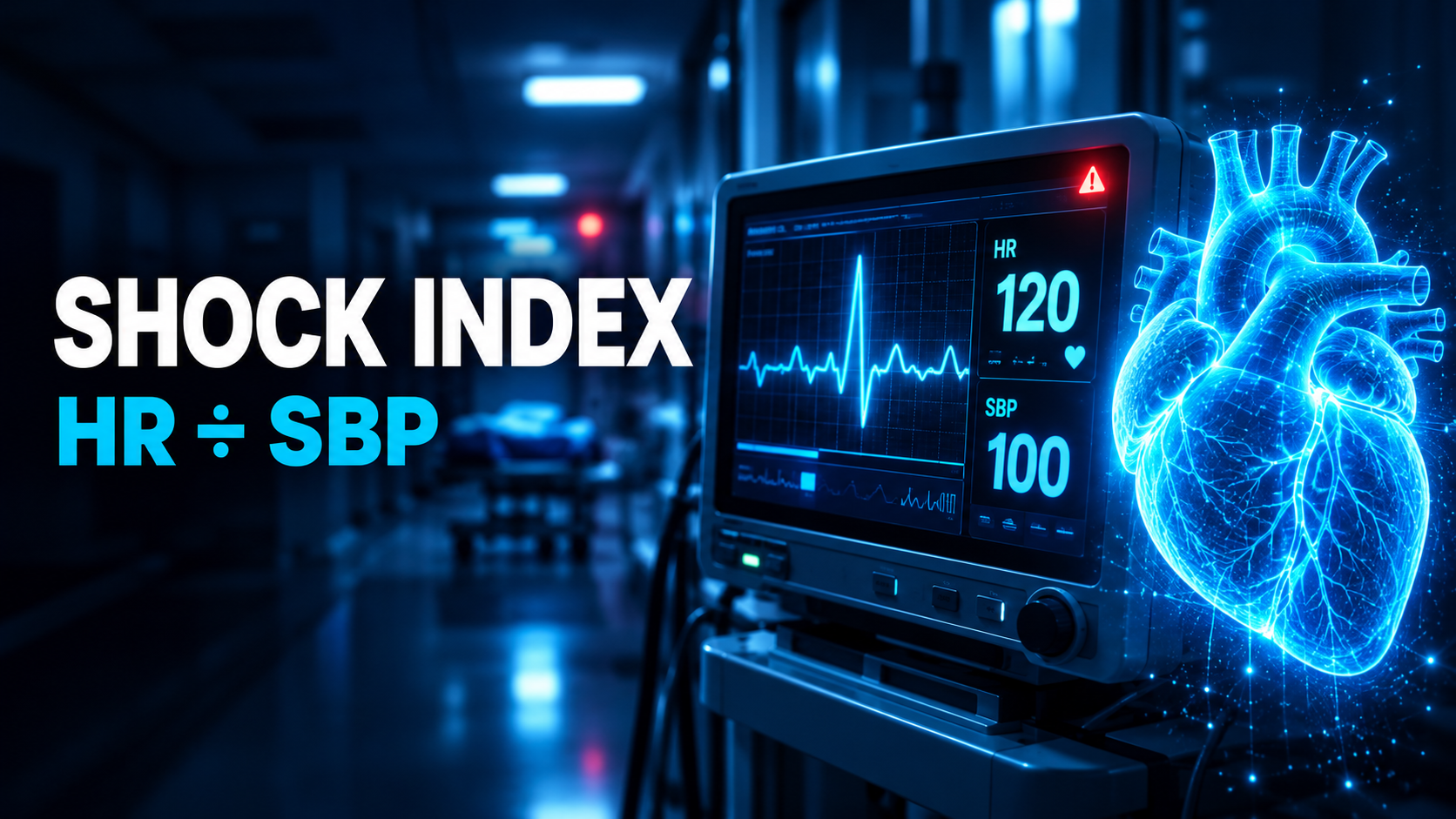
When a patient arrives in the emergency room, the first numbers everyone looks at are heart rate and blood pressure. The problem is that both can look “acceptable” while the body is already struggling to maintain circulation. This is where the shock index becomes useful. It is a single, unitless number that combines two vital signs and helps clinicians spot hidden hemodynamic trouble early.
In this guide, you will learn the shock index formula, its normal range, step-by-step examples, how it differs in pregnancy and children, and where it falls short.
What Is the Shock Index?
The shock index (SI) is a bedside ratio that compares heart rate with systolic blood pressure. According to a review indexed on PubMed Central, SI was first described in 1967 and gives an approximation of hemodynamic status in addition to traditional vital signs. It is also known as Allgöwer’s index, after the two Swiss physicians who introduced it.
Why does this matter? In the early, compensated phase of shock, the body raises heart rate and tightens blood vessels to protect blood pressure. So each vital sign alone may look normal, yet the ratio between them has already begun to drift upward.
Shock Index Formula
Shock Index (SI) = Heart Rate (beats/min) ÷ Systolic Blood Pressure (mmHg)
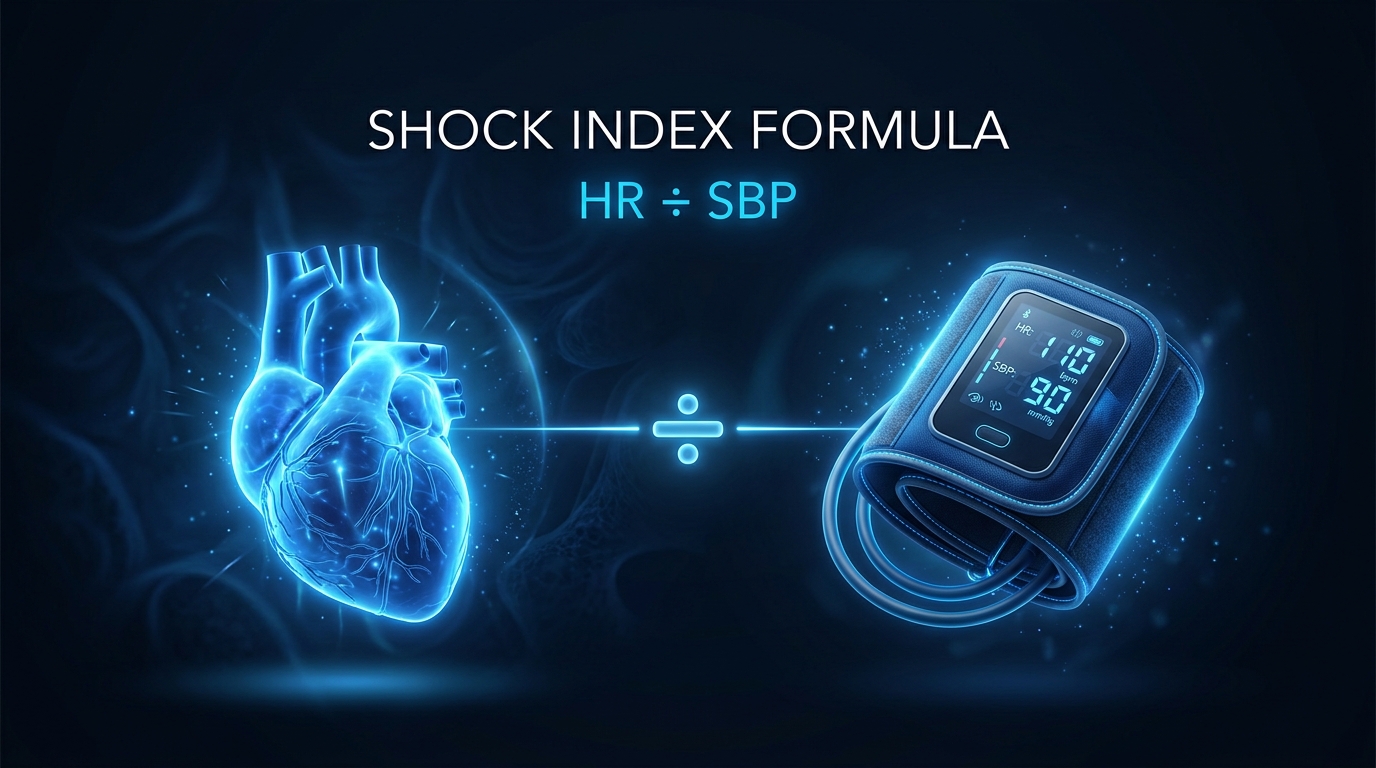
There is no unit. Higher values mean the heart is working harder relative to the pressure it generates. If you have read our guide on the cardiac output formula (CO = HR × SV), you already know why this matters: when stroke volume falls, heart rate rises to compensate, and blood pressure eventually follows.
Normal Shock Index Range
A commonly accepted normal range for adults is 0.5 to 0.7. The same PMC review notes that some evidence suggests values up to 0.9 may be acceptable, while values approaching 1.0 indicate worsening hemodynamic status.
| Shock Index | General Interpretation |
|---|---|
| 0.5 – 0.7 | Normal |
| 0.7 – 0.9 | Borderline, recheck and look for the cause |
| ≥ 0.9 – 1.0 | Concerning, possible early shock |
| > 1.0 – 1.3 | High risk, urgent evaluation |

Note: these bands are a teaching guide. Local protocols and the clinical picture always come first.
How to Calculate the Shock Index (Step by Step)
- Record the heart rate in beats per minute.
- Record the systolic blood pressure in mmHg.
- Divide heart rate by systolic pressure.
- Compare the result with the normal range and the clinical context.
Worked Examples
Example 1: Normal value. HR = 72, SBP = 120. SI = 72 ÷ 120 = 0.60. This is within the normal range.
Example 2: Hidden danger. HR = 110, SBP = 110. SI = 110 ÷ 110 = 1.0. The blood pressure looks acceptable, but the index is already at the warning level. A patient like this with trauma or bleeding needs close attention.
Example 3: Clear instability. HR = 120, SBP = 100. SI = 120 ÷ 100 = 1.2. This suggests potential hemodynamic instability and calls for further evaluation, a point also made in an EMS1 clinical overview of the formula.

Why Is the Shock Index Better Than Heart Rate or BP Alone?
- It catches compensated shock. Heart rate and systolic pressure often appear normal while the body compensates, and the ratio can reveal the strain before pressure drops.
- It is fast. One division, no equipment beyond a pulse and a cuff.
- It works across settings. It is used in trauma, sepsis, gastrointestinal bleeding and obstetric hemorrhage, and as a secondary triage tool in mass casualty incidents.
Modified Shock Index (MSI)
Some clinicians use mean arterial pressure instead of systolic pressure:
MSI = Heart Rate ÷ MAP, where MAP = (SBP + 2 × DBP) ÷ 3
Example: BP 90/60 gives MAP = (90 + 120) ÷ 3 = 70 mmHg. With HR 110, MSI = 110 ÷ 70 ≈ 1.57. MSI takes diastolic pressure into account, which can be useful when diastolic pressure is unusually low or high.
Shock Index in Pregnancy and Postpartum Hemorrhage
This is where the adult cut-offs change. During pregnancy, blood volume expands and normal values sit differently, and postpartum hemorrhage (PPH) is a leading cause of maternal death.
Research on obstetric shock index shows consistent thresholds:
- A PLoS ONE analysis of 958 women with hypovolemic shock in low-resource settings found shock index was consistently among the top two predictors of adverse maternal outcomes, and recommended a threshold of 0.9 or more for referral, 1.4 or more for urgent intervention, and 1.7 or more for high chance of adverse outcome.
- A Malaysian cohort of PPH cases proposed SI ≥ 0.9 as an alert for prompt action and SI ≥ 1.1 as a point where interventions such as blood transfusion may be needed.
- A 2025 prospective study after elective cesarean delivery reported that the mean SI was about 0.7, and 0.9 represented the 95th percentile during the first 48 hours postpartum.
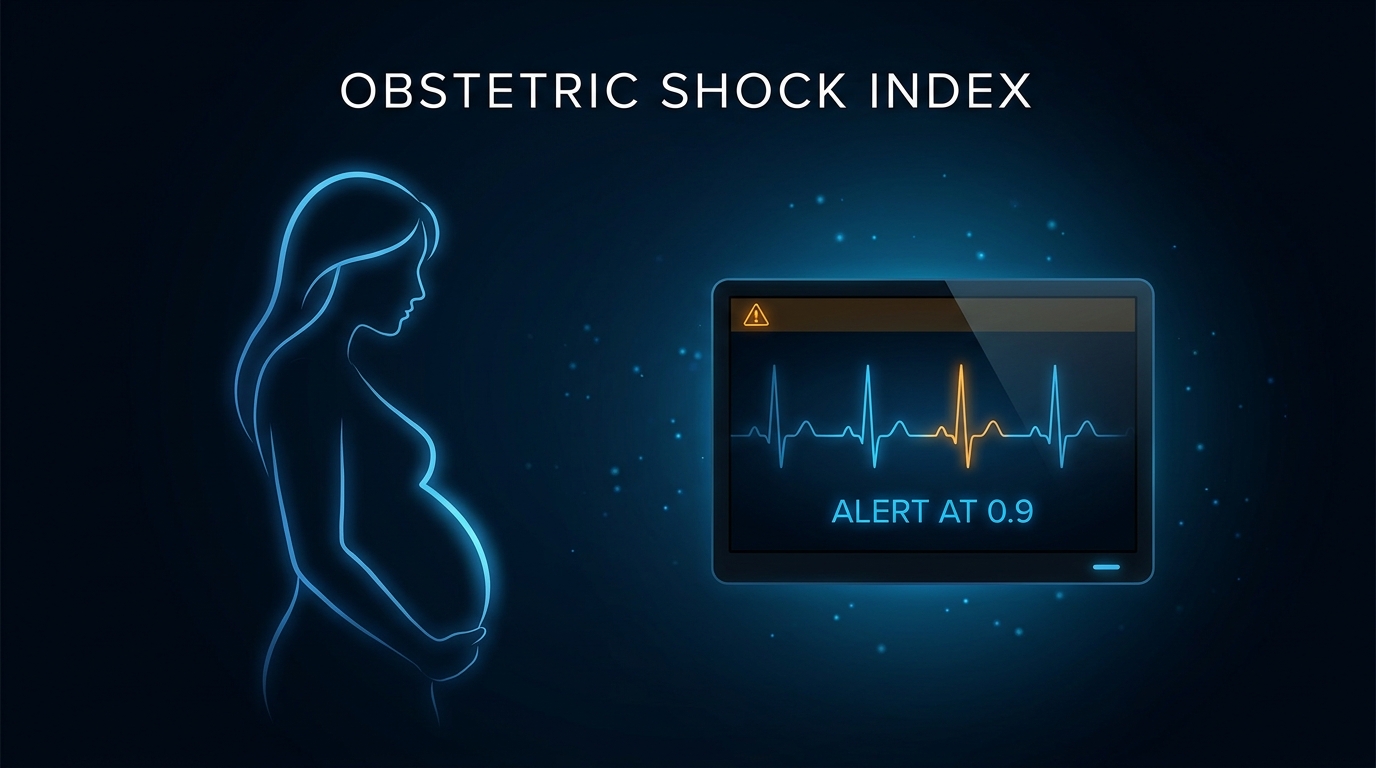
Practical takeaway: after delivery, an SI of 0.9 or higher should prompt a careful reassessment for bleeding. Values above 1.1 are widely treated as a marker of significant hemorrhage risk. Not every study agrees on the exact numbers, and one hospital-based validation study reported that SI ≥ 0.9 had low accuracy for predicting severe PPH in its own population. Thresholds guide attention. They do not replace clinical judgment.
Shock Index in Children
The formula is the same, but normal values depend on age because children have higher resting heart rates. The PMC review lists elevated cut-offs of above 1.22 for ages 4 to 6, above 1.0 for ages 7 to 12, and above 0.9 for ages 13 to 16. Always use an age-specific chart rather than adult values.
Limitations of the Shock Index
- Medications: beta blockers can blunt heart rate, which may falsely lower the index. Antihypertensives and other drugs can also distort values.
- Hypertensive patients: a patient who is normally very hypertensive may look “normal” even at a dangerously reduced pressure.
- Non-shock causes: pain, anxiety, fever, pregnancy and arrhythmias can raise heart rate without shock.
- One number is not a diagnosis: the index should be trended over time and read together with lactate, mental status, skin perfusion and urine output.

Shock Index vs Related Tools
| Tool | What it uses | Best for |
|---|---|---|
| Shock Index | HR ÷ SBP | Quick screening for hidden shock |
| Modified Shock Index | HR ÷ MAP | When diastolic pressure matters |
| Cardiac Output | HR × SV | Measuring actual pump performance |
| Age Shock Index | Age × HR ÷ SBP | Risk in acute myocardial infarction |
Key Takeaways
- Shock index = heart rate ÷ systolic blood pressure.
- Adult normal range is about 0.5 to 0.7. Values near or above 1.0 need attention.
- It can reveal compensated shock before blood pressure falls.
- In obstetrics, 0.9 is a common alert level and above 1.1 suggests serious bleeding risk.
- Children need age-specific cut-offs, and medications can mislead the result.
Frequently Asked Questions
What is a normal shock index?
For most adults it is 0.5 to 0.7, though values up to about 0.9 are sometimes accepted.
What does a shock index of 1.2 mean?
It suggests possible hemodynamic instability, such as bleeding, sepsis or severe dehydration, and needs prompt clinical assessment.
Who invented the shock index?
It was introduced in 1967 by the Swiss doctors Allgöwer and Burri.
Is a high shock index always shock?
No. Pain, fever, anxiety and some medicines can raise it. It is a screening clue, not a diagnosis.
Can the shock index be used in pregnancy?
Yes, but with obstetric-specific cut-offs, as described above.
Shock Index Knowledge Quiz
Available options: 1 to 20
Disclaimer: This article is for educational purposes only and is not a substitute for professional medical advice, diagnosis or treatment.
References and further reading
- Koch E, et al. Shock index in the emergency department: utility and limitations. PubMed Central (PMC6698590).
- El Ayadi AM, et al. Vital sign prediction of adverse maternal outcomes in women with hypovolemic shock: the role of shock index. PLoS ONE, 2016.
- Shock index reference ranges in the first 48 h postpartum after elective cesarean delivery. Eur J Obstet Gynecol Reprod Biol, 2025.
- EMS1 and WikEM clinical overviews of the shock index.