
11–12 min read | Health Tests | Medically reviewed content — for educational purposes only

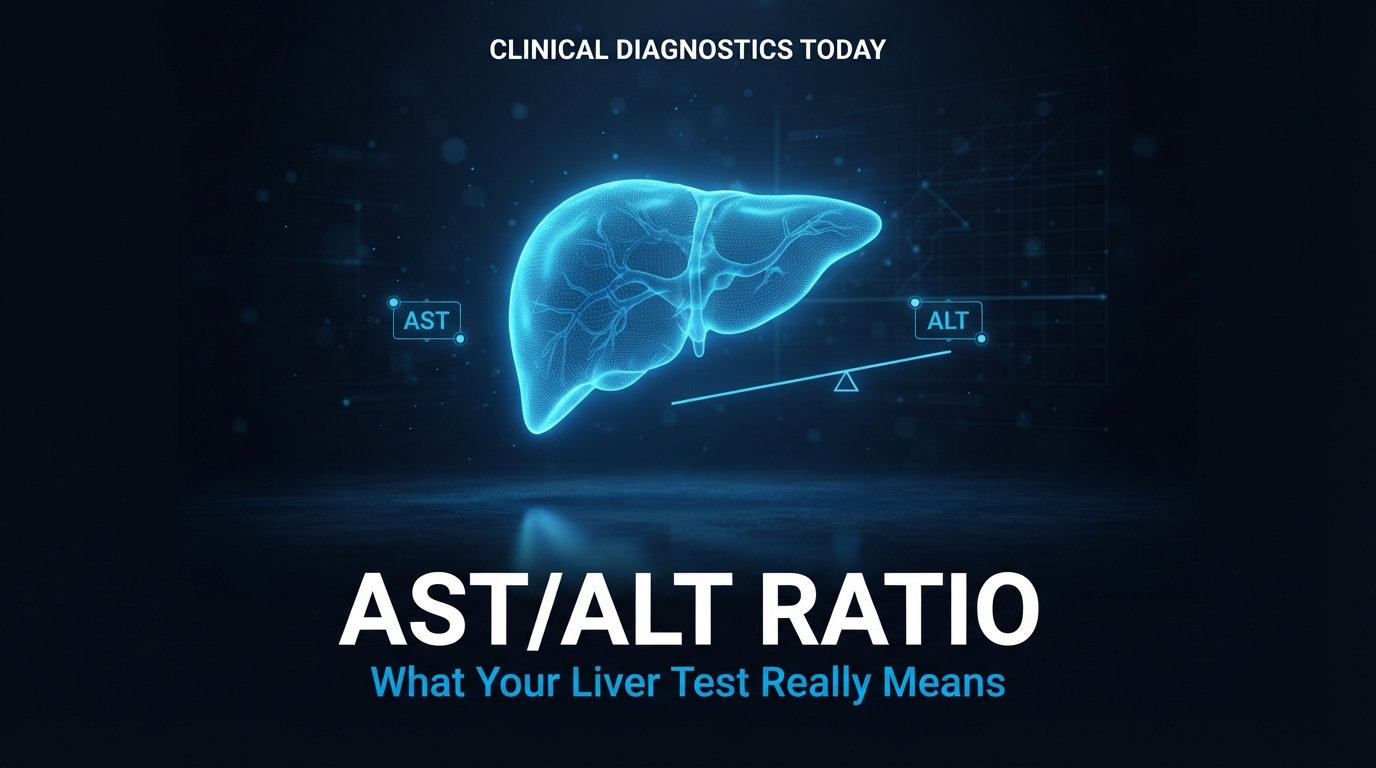
If your liver function test (LFT) report shows both AST and ALT, your doctor or the lab report often shows one more number quietly sitting next to them: the AST/ALT ratio, also called the De Ritis ratio. Most people skip straight past it and focus only on whether AST and ALT are individually high or low — but this ratio can actually tell you what kind of liver stress you might be dealing with, not just whether there is stress in the first place.
If you’ve already read our guide on [High SGPT (ALT): Normal Range, Causes, Symptoms and How to Lower It, this article is the natural next step, because SGPT (ALT) rarely tells the full story on its own. Two people can both have an elevated ALT and still be dealing with completely different underlying problems — and the ratio between AST and ALT is often the first clue that separates them.
This guide walks through everything in plain language: what the ratio actually measures, how to calculate it yourself from a lab report, what different ranges typically mean, and what you can realistically do about it.
Key Takeaways
- The AST/ALT ratio is calculated by dividing your AST (SGOT) value by your ALT (SGPT) value.
- A normal ratio typically falls between 0.7 and 1.4, though exact lab reference ranges vary slightly from lab to lab.
- A ratio below 1 is the classic pattern seen in fatty liver disease (NAFLD/MASLD) and chronic viral hepatitis.
- A ratio above 1.5–2 is strongly associated with alcohol-related liver injury.
- In advanced cirrhosis, the ratio tends to rise above 1 regardless of what originally caused the liver damage.
- The ratio is a pattern clue, not a standalone diagnosis — it must always be read together with the actual AST and ALT values, GGT, bilirubin, platelet count, and your doctor’s clinical assessment.
What Is the AST/ALT Ratio (De Ritis Ratio)?
AST (Aspartate Aminotransferase, also called SGOT) and ALT (Alanine Aminotransferase, also called SGPT) are two enzymes that live inside liver cells. When liver cells are irritated, inflamed, or damaged, both enzymes leak into the bloodstream — which is why a routine Liver Function Test (LFT) almost always measures them together rather than in isolation.
But AST and ALT are not identical twins, and this difference is the whole reason the ratio exists.
ALT lives almost exclusively inside liver cells. A small amount circulates in the kidneys too, but for practical purposes, when your ALT goes up, your doctor can be fairly confident the signal is coming from your liver.
AST is far less liver-specific. It’s present in meaningful amounts in your heart, skeletal muscles, kidneys, brain, and even red blood cells. So AST can rise for reasons that have nothing to do with your liver at all — an intense gym session, a muscle strain, a recent heart attack, or even a rough blood draw that damages red blood cells in the sample (hemolysis).
Because of this asymmetry, simply comparing the relationship between the two numbers — not just their individual values in isolation — gives doctors an extra layer of information about what’s actually happening inside the liver. This relationship is called the AST/ALT ratio, more formally the De Ritis ratio, named after the Italian biochemist Fernando De Ritis, who first described its clinical usefulness back in 1957 while studying patients with viral hepatitis. Nearly seven decades later, it’s still used in hepatology clinics, ICUs, and routine checkups around the world — precisely because it’s cheap, fast, and derived from a test most people already get.
Why Doctors Look at the Ratio Instead of Just the Raw Numbers
Imagine two patients both walk in with an ALT of 90 U/L (elevated). On paper, they look similar. But:
- Patient A has AST of 45 U/L → ratio = 0.5
- Patient B has AST of 190 U/L → ratio = 2.1
Both have “high ALT,” but the story behind each number is very different. Patient A’s pattern is far more consistent with fatty liver or an early viral process. Patient B’s pattern immediately raises suspicion for alcohol-related liver injury, and a doctor would likely ask more pointed questions about drinking history and order a GGT test to confirm.
This is the real value of the ratio: it doesn’t replace the individual AST and ALT values, it adds context to them.
How to Calculate the AST/ALT Ratio
The formula is refreshingly simple — no special equipment or app is strictly required, just your lab report:
AST/ALT Ratio = AST value ÷ ALT value
Worked Example 1
If your lab report shows AST = 40 U/L and ALT = 20 U/L, then:
AST/ALT Ratio = 40 ÷ 20 = 2.0
A ratio of 2.0 sits right at the classic threshold used to flag a possible alcohol-related pattern. It would prompt your doctor to look at your GGT level and ask about alcohol history alongside this number — never in isolation.
Worked Example 2
If AST = 28 U/L and ALT = 42 U/L, then:
AST/ALT Ratio = 28 ÷ 42 = 0.67
This is an ALT-predominant pattern, and it’s actually the single most common pattern seen in routine health checkups today — typically pointing toward early fatty liver changes rather than anything alcohol-related.
Worked Example 3
If AST = 68 U/L and ALT = 30 U/L, then:
AST/ALT Ratio = 68 ÷ 30 = 2.27
An AST-dominant pattern like this, especially when both values are meaningfully elevated (not just borderline), is consistent with the classical alcohol-related hepatitis pattern described in clinical literature.
AST/ALT Ratio: Normal Range
| Enzyme | Typical Male Range | Typical Female Range |
|---|---|---|
| AST (SGOT) | 10–40 U/L | 10–35 U/L |
| ALT (SGPT) | 7–56 U/L | 7–45 U/L |
| AST/ALT Ratio | ≈ 0.7 – 1.4 | ≈ 0.7 – 1.4 |
When both AST and ALT sit comfortably inside their normal ranges, the ratio is usually close to 1 and isn’t clinically meaningful on its own — a ratio calculated from two normal numbers doesn’t need to be acted on. The ratio becomes genuinely useful for interpretation only once at least one of the two enzymes is already elevated above its normal range.
It’s also worth remembering that reference ranges vary slightly between laboratories, machines, and testing methods (a difference of a few units per liter is completely normal from one lab to another). Always check the specific range printed on your own report rather than assuming a single universal number applies everywhere. If you’re tracking your liver health over time, try to stick with the same lab for repeat testing so the numbers are directly comparable.

What Does a High AST/ALT Ratio Mean?
| AST/ALT Ratio | Typical Pattern | What It Usually Suggests |
|---|---|---|
| Below 1.0 | ALT-predominant | Fatty liver (NAFLD/MASLD), chronic viral hepatitis B or C |
| 1.0 – 1.5 | Transition zone | Possible early fibrosis, progression of fatty liver, or drug-related liver stress |
| Above 1.5 – 2.0 | AST-predominant | Suggestive of alcohol-related liver injury |
| Above 2.0 | Strongly AST-predominant | Strongly associated with alcoholic hepatitis, especially when paired with a raised GGT |
| Rising ratio in someone with known liver disease | Progressive pattern | May indicate advancing fibrosis or cirrhosis, regardless of the original cause |
A frequently cited clinical study (Williams and colleagues, published in Gastroenterology, 1988) found that a ratio greater than 2 has roughly 96% specificity for alcohol-related liver disease — meaning it rarely shows up this high for any other reason, making it one of the more reliable non-invasive clues available from a routine blood test.
Interestingly, in advanced cirrhosis, the ratio tends to climb above 1 no matter what originally caused the liver damage — whether it started as fatty liver, viral hepatitis, or alcohol-related injury. This happens because as fewer healthy, functioning liver cells remain, ALT production itself drops, and vitamin B6 (a cofactor ALT needs to function properly) becomes depleted, which suppresses ALT further while AST remains comparatively higher.
A Closer Look at Alcohol-Related Liver Injury and the Ratio
The reason alcohol pushes AST higher than ALT has a specific biological explanation, not just a statistical correlation. Chronic alcohol use damages the mitochondria (the energy-producing structures) inside liver cells, and a large share of AST specifically lives inside mitochondria, while ALT does not. Alcohol also depletes vitamin B6, which ALT depends on more heavily than AST does. The combined effect is a selective rise in AST relative to ALT — which is exactly what produces that telltale ratio above 1.5–2.
This doesn’t mean every heavy drinker will show this exact pattern, and it doesn’t mean everyone with this pattern drinks heavily — but as a population-level clue, it’s one of the more dependable ones in liver diagnostics.
What Does a Low AST/ALT Ratio Mean?
A ratio below 1 — meaning ALT is higher than AST — is actually the more common pattern seen in everyday liver checkups today, especially in people with:
- Non-alcoholic fatty liver disease (NAFLD / MASLD): by far the most common cause of a low AST/ALT ratio in the general population right now, closely linked to obesity, high cholesterol, high triglycerides, and insulin resistance. As lifestyles have shifted globally, this has become the leading reason people see mildly abnormal liver enzymes at all.
- Chronic viral hepatitis (B or C): in the inactive or early phase, ALT typically rises more than AST, since the injury pattern is largely confined to the liver cell cytoplasm rather than deeper cellular structures.
- Drug-induced liver injury: certain medications, herbal supplements, and even some over-the-counter painkillers can selectively stress liver cells in a way that raises ALT more than AST.
- Early-stage liver inflammation of almost any cause, before more advanced injury sets in and the pattern potentially shifts.
A low ratio is generally less alarming for acute alcohol-related damage specifically, but it should never be dismissed outright — especially if ALT itself is meaningfully elevated, since it may still point toward fatty liver disease that quietly progresses if left unaddressed for years. Fatty liver disease is often symptom-free for a long time, which is precisely why routine blood work — not how someone feels day to day — is usually what catches it first.
AST/ALT Ratio Across Different Conditions: A Deeper Look
Fatty Liver Disease (NAFLD/MASLD)
This is now the most common liver condition worldwide, and it typically produces a ratio below 1 in its earlier stages. As the disease progresses toward non-alcoholic steatohepatitis (NASH/MASH) and fibrosis, the ratio can gradually creep upward, sometimes crossing 1 — which is one reason doctors track the ratio over time rather than relying on a single reading.
Viral Hepatitis
In chronic hepatitis B or C without significant fibrosis, the ratio usually stays below 1. However, in acute, severe (fulminant) viral hepatitis, AST can rise disproportionately, temporarily pushing the ratio above 1 — a pattern that can look confusing if it isn’t interpreted alongside the full clinical picture.
Alcoholic Liver Disease
As discussed above, this is the classic scenario for a ratio above 1.5–2, particularly in alcoholic hepatitis. Interestingly, if someone stops drinking for several days before the blood draw, ALT can start rising relative to AST as the acute mitochondrial stress settles, which can shift the ratio back down — another reason timing and context both matter.
Cirrhosis (Any Cause)
Regardless of the original trigger — alcohol, viral, fatty liver, or autoimmune — advanced cirrhosis tends to push the ratio above 1. This is one of the more counterintuitive but well-documented patterns in hepatology, and it’s part of why a rising ratio in someone with known chronic liver disease is taken seriously as a possible sign of progression.
Muscle Injury and Heart-Related Causes
Since AST is present in muscle and heart tissue, conditions like rhabdomyolysis (severe muscle breakdown), a recent hard workout, a muscle disease, or a heart attack can all raise AST specifically — sometimes dramatically — without any real liver injury at all. In these situations, other liver-specific markers (like ALT staying normal, or GGT staying normal) help clarify that the liver itself isn’t the source.
Drug-Induced and Autoimmune Liver Injury
Many medications and some autoimmune conditions produce an ALT-predominant pattern similar to fatty liver disease, which is why a detailed medication history and, where relevant, autoimmune antibody testing often go hand in hand with an abnormal ratio that doesn’t fit a typical alcohol or fatty-liver picture.
Limitations of the AST/ALT Ratio (Why It’s Not a Diagnosis by Itself)
It’s worth being direct about this: the AST/ALT ratio is a supporting clue, not a verdict. A few important limitations to keep in mind:
- It can be misleading when either value is only mildly elevated or borderline. A ratio calculated from two numbers that are barely outside normal carries far less weight than one calculated from two clearly elevated numbers.
- Non-liver sources of AST can distort it, as covered above — recent exercise, muscle injury, or a heart event can all raise AST without any liver problem.
- It varies with age and sex to some degree, and reference points aren’t perfectly universal across all labs and populations.
- A single reading is a snapshot, not a trend. Doctors generally place more weight on how the ratio changes over repeat testing than on one isolated number.
- It should always be interpreted together with GGT, bilirubin, alkaline phosphatase (ALP), albumin, platelet count, and imaging (like an ultrasound) when a clearer diagnosis is needed.
Symptoms That May Prompt an AST/ALT Check
An abnormal ratio on its own usually causes no symptoms directly — it’s the underlying liver stress that produces noticeable signs such as:
- Persistent fatigue or unusual weakness
- Yellowing of the skin or eyes (jaundice)
- Dark-colored urine or unusually pale stools
- Nausea, reduced appetite, or unexplained weight changes
- Pain or discomfort in the upper right side of the abdomen
- Unexplained swelling in the abdomen or legs
- Easy or unusual bruising
- Persistent itching without an obvious skin cause
Many people with early liver stress, especially from fatty liver disease, have no symptoms at all — which is exactly why routine blood work often catches these patterns long before someone feels unwell. If you do notice the symptoms above, don’t try to interpret your ratio alone at home — book an appointment and let a doctor read it alongside your full liver panel and history.
Test Preparation: What Affects Your AST/ALT Results
If you’re getting AST and ALT tested (or retested) and want the most accurate, comparable reading, a few practical points help:
- Avoid intense exercise for at least 24–48 hours before the test, since strenuous activity can temporarily raise AST from muscle tissue alone.
- Avoid alcohol for at least 24 hours before testing, and ideally longer if you’re specifically trying to assess baseline liver health.
- Mention all medications and supplements you’re currently taking to your doctor, since several common ones can influence results.
- Fasting is usually not strictly required for AST/ALT specifically, though your doctor may ask you to fast if the test is bundled with other panels like a lipid profile.
- Try to use the same lab for repeat tests when you’re tracking a trend over weeks or months, since small methodology differences between labs can otherwise look like a real change when it isn’t.

How to Support a Healthier AST/ALT Balance
Since the ratio simply reflects what’s happening inside your liver, the same lifestyle steps that help lower an elevated SGPT (ALT) also help bring the overall ratio back toward a healthy, stable pattern:
- Cut back on or eliminate alcohol — this is the single biggest lever for correcting an AST-dominant (high ratio) pattern, and improvement can often be seen within weeks of sustained abstinence.
- Manage weight and blood sugar — since fatty liver is now the leading cause of an ALT-dominant (low ratio) pattern, even a modest 5–10% reduction in body weight has been shown to meaningfully improve liver fat and enzyme levels.
- Review your medications and supplements with a doctor — don’t self-adjust anything, but do flag any elevated liver results so your prescriber can weigh the options.
- Eat a liver-friendly diet — lean toward more vegetables, whole grains, fiber, and healthy fats (like olive oil, nuts, and fatty fish), and away from fried food, refined sugar, and heavily processed snacks.
- Stay hydrated and get regular, moderate exercise — brisk walking, cycling, or swimming most days of the week supports liver health, but avoid very intense exertion right before a retest, since it can temporarily skew AST.
- Prioritize sleep and manage stress — both are increasingly recognized as contributors to metabolic liver stress, even though they’re easy to overlook.
- Get retested rather than guessing — many mild, first-time elevations normalize within 2–4 weeks once the underlying trigger (a recent illness, a new medication, a heavy weekend) is addressed. Retesting turns a single confusing number into a much more useful trend.

When to See a Doctor
Speak to a doctor promptly if your AST/ALT ratio is abnormal and you also notice jaundice, dark urine, persistent abdominal pain, unexplained weight loss, or if the abnormality persists across repeat testing rather than settling down. A single unusual reading is common and often harmless — a pattern over time, especially alongside symptoms, is what genuinely matters and deserves proper medical evaluation rather than self-diagnosis.
Frequently Asked Questions
Q1. What is a normal AST/ALT ratio? Most labs consider a ratio of roughly 0.7 to 1.4 to be within the normal range, though this can vary slightly by laboratory and testing method.
Q2. Is a high AST/ALT ratio always caused by alcohol? Not always, but a ratio above 2 is strongly associated with alcohol-related liver injury and is uncommon for other reasons. Other causes, including advanced cirrhosis of any origin, muscle injury, or a heart-related event, can also raise the ratio.
Q3. What does it mean if ALT is higher than AST? This produces a ratio below 1 and is the most common pattern seen today, typically pointing toward fatty liver disease (NAFLD/MASLD) or chronic viral hepatitis rather than alcohol-related injury.
Q4. Can exercise affect my AST/ALT ratio? Yes. Intense exercise or muscle strain shortly before a blood draw can temporarily raise AST specifically, since AST is also present in muscle tissue — this can distort the ratio without reflecting any real liver problem.
Q5. Can the AST/ALT ratio diagnose liver disease by itself? No. It’s a helpful pattern indicator that guides doctors toward likely causes, but a proper diagnosis always requires the full picture — actual enzyme levels, GGT, bilirubin, platelet count, imaging, patient history, and sometimes additional testing.
Q6. How often should I repeat an AST/ALT test? This depends on your original results and your doctor’s advice, but many mild, first-time elevations are simply rechecked after 4–6 weeks to see whether the trend is improving, worsening, or stable.
Q7. Does age affect the AST/ALT ratio? To some extent — the ratio can trend slightly higher with age in some people, which is one reason doctors interpret results in the context of a person’s overall history rather than a single fixed cutoff.
Q8. Can a low AST/ALT ratio ever be a bad sign? On its own, a low ratio usually isn’t alarming, but if it’s paired with a clearly elevated ALT, it can still indicate meaningful fatty liver changes or early viral hepatitis that deserve attention, even without an alcohol-related pattern.
Q9. What other tests are usually done alongside AST and ALT? Doctors commonly pair AST/ALT with GGT, alkaline phosphatase (ALP), total and direct bilirubin, albumin, and sometimes platelet count or imaging like an abdominal ultrasound, to build a fuller picture of liver health.
Q10. Can dehydration or a poor blood draw affect the ratio? Yes, indirectly. A traumatic or difficult blood draw can cause mild hemolysis (red blood cell breakdown) in the sample, which can artificially raise AST since AST is also present in red blood cells — labs are usually trained to flag and repeat visibly hemolyzed samples.
Disclaimer: This article is for general educational purposes only and does not replace professional medical advice, diagnosis, or treatment. Always discuss your lab results with a qualified doctor.
Related reading: [High SGPT (ALT): Normal Range, Causes, Symptoms and How to Lower It]
AST/ALT Ratio Knowledge Quiz
Available options: 1 to 20