

Dark, thick, velvety skin on the back or sides of the neck is one of the most common skin changes people search about. Many assume it is dirt or tanning and scrub it harder, but in many cases it is a skin sign called acanthosis nigricans. It is often linked to how the body handles insulin, and sometimes to other health conditions. In this guide you will learn what it looks like, what causes it, which tests a doctor may suggest, what treatment actually has evidence, and the warning signs that need prompt medical attention.
What Are Dark Patches on the Neck?
Dark patches on the neck have several possible causes, but a very common one is acanthosis nigricans. StatPearls describes it as a velvety darkening of the skin that usually occurs in skin folds. The change often involves the groin, the armpits and the back of the neck. According to a hospital patient guide, children most often get it on the back of the neck, and the skin may look dirty, but scrubbing will not make it go away.
What Does Acanthosis Nigricans Look Like?
Typical features include:
- Dark colour: the skin may look gray, brown or black.
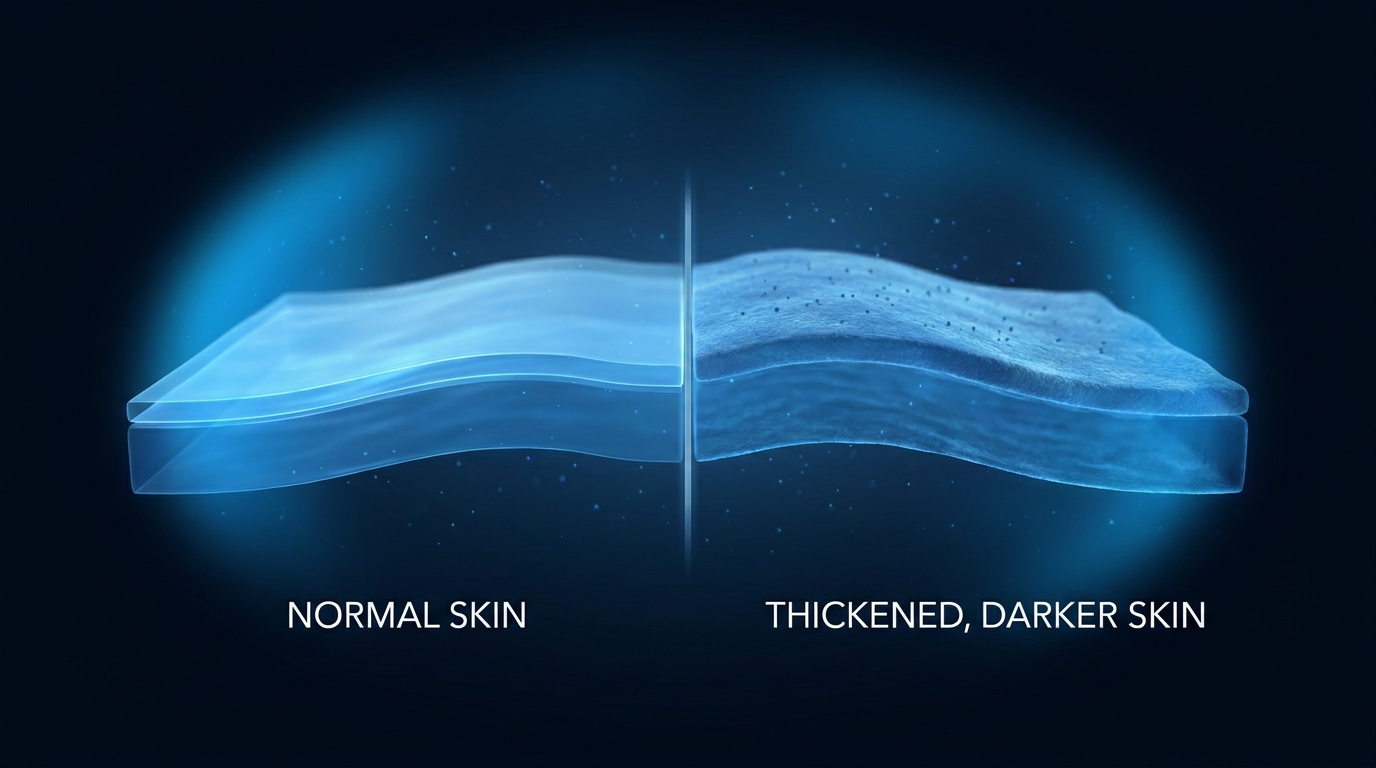
- Thick, velvety texture: it feels different from the surrounding skin, not just darker. Medical News Today explains that two changes happen together: extra pigment makes the skin darker, and extra keratin makes the top layer thicker.
- Skin folds: the neck, armpits and groin are the usual places. It can also appear on the elbows, knees and knuckles.
- Gradual onset: it generally appears slowly over time.
- Mild itching: this can occur, but it is not common in children.
A flat tan line or a patch that is only darker (and not thicker or velvety) may have another cause, so a doctor’s examination matters.
What Causes Dark Patches on the Neck?
Insulin resistance (the most common cause)
StatPearls states that acanthosis nigricans is most commonly associated with diabetes and insulin resistance. When the body does not respond well to insulin, the level of insulin in the blood rises. The StatPearls authors explain that this raised insulin activates growth receptors on skin cells (keratinocytes), which makes the skin cells multiply and thicken, and this is what you see as velvety dark skin.

Insulin resistance can happen long before type 2 diabetes is diagnosed. That is why a dark neck can be an early visible clue, and why doctors may check your blood sugar.
Obesity
Obesity is one of the most common conditions linked with acanthosis nigricans. In obesity-related cases, treating the weight problem with diet, weight reduction or medication can help the skin patches resolve. This is a skin and metabolic matter, and it should never be a reason for shame or blame.
Hormonal conditions, including PCOS
Hormone-related conditions can cause it as well. Medical News Today notes that acanthosis nigricans often occurs in people with polycystic ovary syndrome (PCOS), which can bring insulin resistance and difficulty maintaining a moderate weight. StatPearls also describes a syndrome called HAIR-AN, which combines high male hormones, insulin resistance and acanthosis nigricans.
Medicines
Multiple medications have been linked with the condition. StatPearls lists systemic glucocorticoids and oral contraceptives among the medicines that can cause it. When the offending medicine is stopped, acanthosis nigricans usually resolves, but never stop a prescribed medicine on your own. Always speak to your doctor first.
Autoimmune and other conditions
StatPearls also associates it with autoimmune conditions such as lupus, Sjögren’s syndrome, scleroderma and Hashimoto’s thyroiditis, and with rarer endocrine and genetic conditions.
Cancer (rare, but important)
Rarely, acanthosis nigricans is a sign of an internal cancer. StatPearls explains that malignant acanthosis nigricans is linked to gastrointestinal adenocarcinomas and to cancers of the prostate, breast and ovary. It usually has a rapid onset and may come with skin tags, many seborrheic keratoses or thickened palms known as “tripe palms”. The same source notes that in nearly one-third of these patients the skin changes appear before any other sign of the cancer.

Red Flags: When Dark Neck Patches Need Prompt Medical Attention
See a doctor soon if the dark, velvety skin:
- appears suddenly or spreads quickly
- comes with intense itching
- involves the palms, lips, mouth or other mucous membranes
- appears together with many new skin tags or warty growths
- appears with unexplained weight loss, a persistent cough or other new symptoms

StatPearls also points out that benign and malignant acanthosis nigricans cannot be told apart just by looking at the skin, which is why a medical assessment is needed.
Other Skin Conditions That Can Look Similar
Not every dark patch on the neck is acanthosis nigricans. The StatPearls article on confluent and reticulated papillomatosis lists acanthosis nigricans, tinea versicolor and several other conditions among the look-alikes. Friction from collars, sun exposure and old skin irritation can also cause darker skin. A dermatologist can usually tell these apart, and may use a skin biopsy if the diagnosis is unclear.
How Is Acanthosis Nigricans Diagnosed?
StatPearls explains that the condition is diagnosed clinically, which means by examining the skin, and can be confirmed with a skin biopsy. Doctors usually go further to look for the cause. A hospital guide notes that doctors may order blood tests to look for diabetes or other related conditions.
In practice, a doctor may suggest the following (this part is general clinical practice and the exact tests depend on your history):
- blood sugar tests such as fasting glucose or HbA1c
- a review of your medicines
- hormone tests if PCOS or thyroid disease is suspected
- further tests only if red flags are present
How Is It Treated?
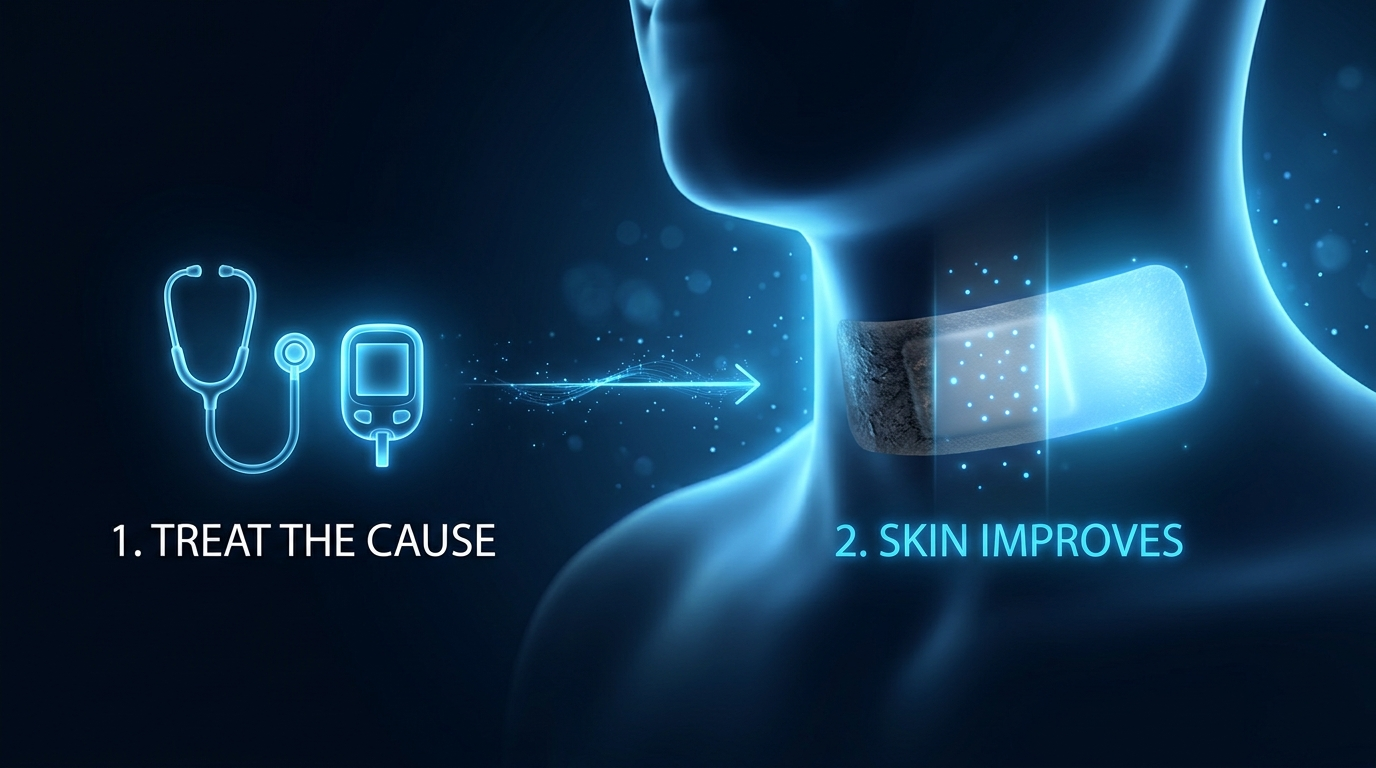
The key point from every source is that the skin patches usually improve when the underlying cause is treated.
1. Treat the cause
- Insulin resistance, prediabetes or diabetes: a doctor-guided plan for diet, activity, weight management and medicines if needed.
- Obesity-related cases: weight reduction can resolve the patches.
- Medicine-related cases: stopping or changing the medicine, only under medical advice.
- Cancer-related cases: treating the tumour is the mainstay.
2. Skin treatments for appearance
A 2018 review of treatment options notes that research on treatment is limited and based on small trials and case reports. It describes topical retinoids as one of the first-line options, and also discusses vitamin D creams (calcipotriene) and chemical peels such as trichloroacetic acid. Oral retinoids such as isotretinoin and acitretin can work, but the review says improvement needs large doses and long courses, with relapse after stopping.
3. What about metformin?
The same review reported a small randomized trial of seven patients with neck acanthosis nigricans in which metformin or rosiglitazone had no effect on the severity of the skin patches, although other measures improved modestly. Metformin is a diabetes medicine and should only be taken when a doctor prescribes it for the right reason.
Treatment is for your skin and your health, and results can take time, so patience matters.
What Not to Do
- Do not scrub hard. Scrubbing will not remove it and can irritate the skin.
- Do not self-treat with strong lightening creams or acids without a dermatologist’s advice. The sources reviewed do not support the many kitchen “remedies” shared online, and harsh products can irritate or worsen darkening.
- Do not stop or start any medicine because of dark patches.
Prevention and Lifestyle
Because insulin resistance is the most common driver, healthy habits that improve insulin sensitivity are the most sensible approach: regular physical activity, a balanced diet, a healthy weight range and regular check-ups. Medical News Today notes that maintaining a moderate weight may improve insulin sensitivity and, in turn, the skin symptoms.
Key Takeaways
- Velvety, thick, dark skin on the neck is often acanthosis nigricans, not dirt.
- It is most commonly associated with insulin resistance and diabetes, and also with obesity, PCOS, some medicines and, rarely, cancer.
- A doctor can diagnose it by examination and may check blood sugar and other tests.
- Treating the cause is the most important step, and skin creams mainly help appearance.
- Sudden onset, rapid spread, intense itching, palm or mucosal changes and many skin tags need prompt medical attention.
Conclusion
Dark patches on the neck deserve more attention than a scrub or a cream. They can be an early visible sign that your body may be struggling with insulin, a clue that lets you act before problems develop. See a doctor, get the right tests, treat the underlying cause and be cautious with quick fixes. For most people, with the right care the skin does improve.
Frequently Asked Questions
Why is my neck turning dark?
A common reason is acanthosis nigricans, linked to insulin resistance, obesity, PCOS or certain medicines. Other causes include friction, sun exposure and fungal skin conditions, so see a doctor for a proper diagnosis.
Is a dark neck a sign of diabetes?
It can be a sign of insulin resistance or prediabetes, and it is most commonly associated with diabetes and insulin resistance. Not everyone with a dark neck has diabetes, so a blood sugar test is the sensible next step.
Can dark neck patches go away?
Often yes, when the underlying cause is treated. For example, patches may improve with weight loss in obesity-related cases or when a causative medicine is stopped by a doctor.
Can I remove dark patches on the neck at home?
Scrubbing does not work. Gentle skin care is fine, but avoid harsh products and see a dermatologist before using strong creams.
Is acanthosis nigricans contagious?
No. It is a skin sign of an internal or metabolic cause, not an infection.
Do children get dark neck patches?
Yes. The back of the neck is the most common site in children, and doctors may check for insulin resistance.
When is a dark neck serious?
When it appears suddenly, spreads quickly, itches intensely, or comes with palm changes, many skin tags or other new symptoms. Seek medical advice promptly.
Dark Neck (Acanthosis Nigricans) Knowledge Quiz
Available options: 1 to 20
Disclaimer: This article is for educational purposes only and is not a substitute for professional medical advice, diagnosis or treatment. See a qualified doctor for any skin change.
References
- Rawla P, et al. Acanthosis Nigricans. StatPearls. Updated August 2023. NBK431057.
- Patel NU, Roach C, Alinia H, Huang WW, Feldman SR. Current treatment options for acanthosis nigricans. Clin Cosmet Investig Dermatol. 2018;11:407-413. PMC6086114.
- Medical News Today. Acanthosis nigricans: Causes, symptoms and treatment.
- Nemours/Rady Children’s. Acanthosis Nigricans (AN) patient guide.
- StatPearls. Confluent and Reticulated Papillomatosis. NBK459130.