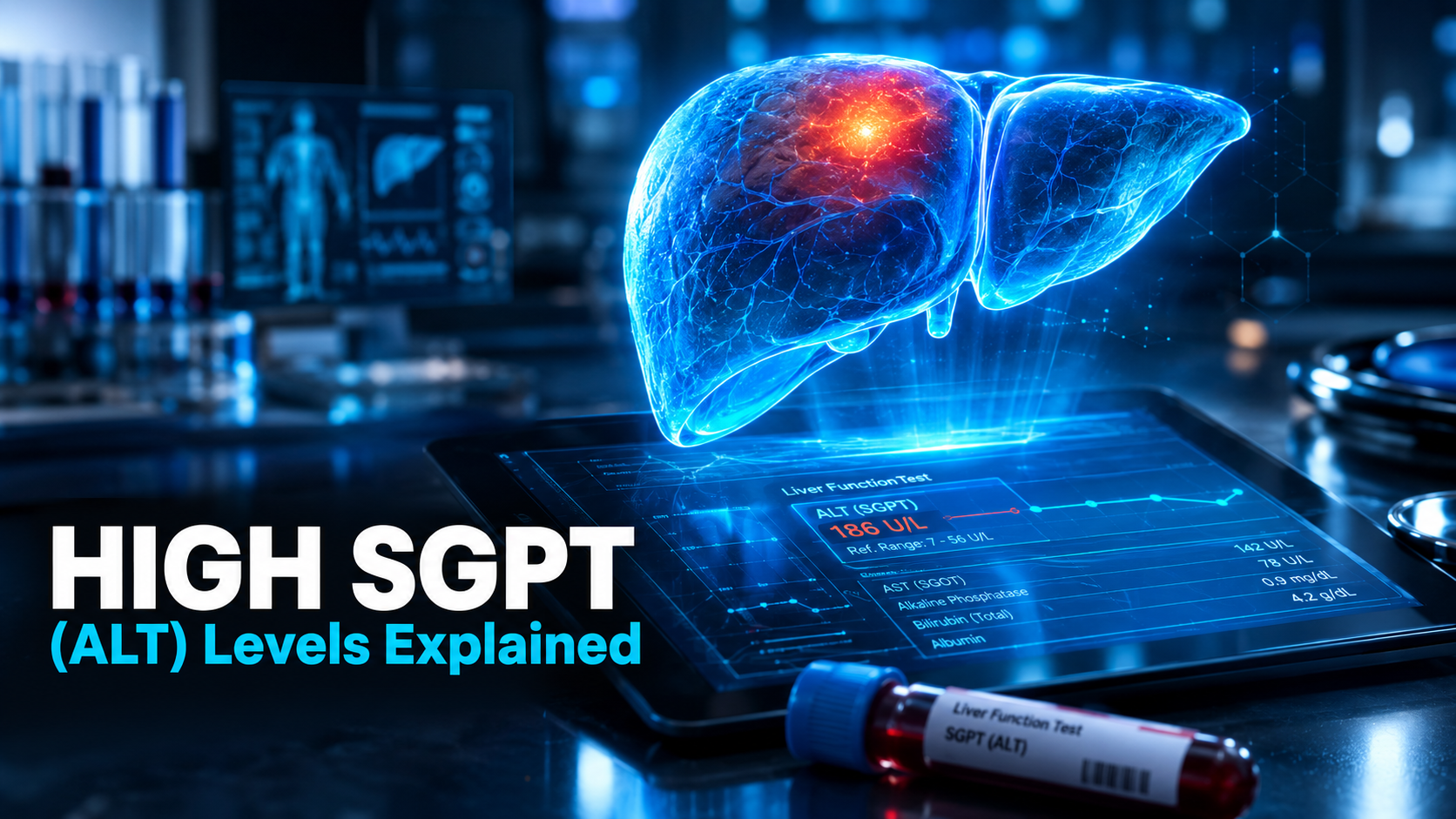
You open your liver function test (LFT) report and one line stands out:SGPT (ALT) – High. Many people in Pakistan immediately think “my liver is finished” or rush to buy a herbal liver tonic. Neither reaction helps.
A high SGPT is a signal, not a diagnosis. It tells you your liver cells may be irritated, and it’s your cue to find out why. This guide explains what SGPT is, its normal range, the most common causes in Pakistan, and the practical steps that actually help.
Medical note: This article is for education and does not replace advice from a qualified doctor. Please discuss your own report with a physician.
Quick Answer
SGPT = ALT, a liver enzyme. A high level means liver cells may be inflamed or damaged.
Many labs treat below about 50 IU/L as normal, but ranges differ, so check the one printed on your report.
The most frequent causes are fatty liver, hepatitis B/C, infections, and medicines.
Mildly raised SGPT often has no symptoms, so testing is the only way to know.
Treatment depends on the cause: weight loss and exercise for fatty liver, antivirals for hepatitis, stopping the offending drug, and repeat testing.
What Is SGPT (ALT)?
SGPT stands for serum glutamic pyruvic transaminase. Modern labs call it ALT, or alanine aminotransferase. Both names mean the same test, and Pakistani reports often print both, such as “ALT (SGPT).”
ALT is an enzyme that helps liver cells turn amino acids into energy. It sits mostly inside liver cells. When those cells are inflamed, injured or dying, ALT leaks into the bloodstream, so a blood test can measure how much has escaped.
ALT is also found in smaller amounts in muscle, kidney and heart. That is why doctors never judge the liver from ALT alone
. They look at the full liver profile and your symptoms.
Why Do Doctors Order an SGPT Test?
You may be asked to do an LFT when you:
Have tiredness, nausea, loss of appetite, or right-sided abdominal discomfort
Notice yellow eyes or dark urine
Have diabetes, high cholesterol, obesity, or a fatty liver on ultrasound
Take long-term medicines such as anti-TB drugs, statins or painkillers
Are being screened before surgery, before starting a new medicine, or during a routine health check
Have been exposed to hepatitis (family member, needle-stick, unsafe injection or transfusion)
SGPT (ALT) Normal Range
There’s no single universal number. Reference ranges change with the lab’s equipment, the method used, and even the population tested. As a general guide, values below roughly 50 IU/L are considered normal in most cases for both men and women, while “ideal” or healthy-liver values are often quoted much lower, around 29–33 IU/L for men and 19–25 IU/L for women. Those ranges match what several diagnostic lab references list. bajajfinservhealth
Group
Commonly quoted ALT range*
Adult men
Up to ~40–50 IU/L (ideal ~29–33)
Adult women
Up to ~35–50 IU/L (ideal ~19–25)
Children
Varies by age; lab-specific
*Always follow the range printed on your report.
Things that can slightly change your ALT
Body weight and waist size: higher BMI usually means higher ALT
Intense exercise in the previous 1–2 days
Recent illness, fever or infection
Medicines and supplements, including herbal products
Alcohol in the last few days
Time of day and lab variation: two labs can give slightly different numbers for the same person
That’s why doctors often repeat an abnormal ALT after a few weeks before deciding anything.
Needs a work-up: viral hepatitis, fatty liver with inflammation, drug effect
Markedly raised (~5–10x)
Significant liver inflammation; prompt evaluation
Very high (>10x, sometimes in the hundreds or thousands)
Urgent: acute hepatitis, drug toxicity, or acute liver injury
“My SGPT is 100. Is it serious?” If your upper limit is about 40–50, a value of 100 is roughly 2x–2.5x above normal. That is clearly abnormal and needs a proper work-up, but it is not an emergency by itself. A repeat test, the rest of the LFT, hepatitis screening and an ultrasound will usually explain it.
SGPT vs SGOT: What’s the Difference?
Your report probably also lists SGOT (AST). Both are liver enzymes, but they behave differently:
ALT (SGPT) is more specific to the liver.
AST (SGOT) is also found in heart, muscle and other tissues.
Doctors compare the two. In general, ALT higher than AST is common in fatty liver and viral hepatitis, while AST clearly higher than ALT (particularly a ratio above 2) can point toward alcohol-related injury or more advanced scarring. This is only a clue, not a diagnosis, and it must be read with the whole picture.
Fatty liver, now often called MASLD (metabolic dysfunction-associated steatotic liver disease), happens when extra fat builds up in liver cells. It is strongly linked to:
Being overweight, especially belly fat
Type 2 diabetes and prediabetes
High cholesterol and triglycerides
Sedentary lifestyle and a diet high in refined flour, sugar, fried food and sweetened drinks
Many people with fatty liver feel completely normal. It is often found by accident on an ultrasound or an abnormal LFT. It’s an important cause, but not the only one: a high SGPT doesn’t automatically mean fatty liver, and some people with fatty liver even have a normal ALT.
2. Hepatitis B and Hepatitis C
Viral hepatitis is one of Pakistan’s biggest liver problems. A national prevalence survey reported hepatitis B surface antigen in about 2.5% and hepatitis C antibodies in about 4.8% of the general population, roughly 7.6% combined. Reusing syringes was among the strongest risk factors linked to these infections. ResearchGateResearchGate
The World Health Organization has also highlighted contributing factors in Pakistan, including unsafe syringes, unscreened blood transfusions, unsterilised dental instruments and reused razor blades at barbers. WHO
Hepatitis B and C often cause no symptoms for years while quietly damaging the liver, and a persistently raised ALT may be the first clue. Anyone with unexplained high SGPT should be tested for HBsAg and anti-HCV. Both infections are treatable today, and hepatitis B is preventable with vaccination.
3. Acute infections (hepatitis A, E, dengue, typhoid)
Contaminated water and food can cause hepatitis A and E, especially in monsoon and flood-affected periods. Dengue and typhoid can also push ALT and AST up temporarily. In these cases enzymes may be quite high but usually settle as the infection resolves.
4. Medicines and supplements
Many drugs can irritate the liver, particularly with long use or high doses:
Paracetamol taken in excess
Some antibiotics and anti-TB medicines
Statins (mild rises are common and usually monitored)
NSAID painkillers and certain anti-epileptics are also among medicines known to cause mild ALT elevation. bajajfinservhealth
Unregulated herbal products, body-building supplements and “energy” or fairness products
Never stop a prescribed medicine on your own. Talk to your doctor, who can adjust or switch it safely.
5. Intense exercise or muscle injury
Heavy gym sessions, sports injuries or muscle disorders can raise ALT (and AST) without any liver disease. If you lifted heavy the day before your test, mention it to your doctor.
6. Alcohol and other less common causes
Alcohol-related liver disease, autoimmune hepatitis, Wilson disease, hemochromatosis, celiac disease, thyroid disorders and bile duct problems are less common but are considered when the usual causes don’t explain the result.
Symptoms: What Might You Notice?
Mildly high SGPT usually causes no symptoms. When the liver is more seriously affected, people may notice:
Persistent tiredness and weakness
Nausea, poor appetite, feeling full quickly
Discomfort or heaviness in the upper right abdomen
Yellow eyes or skin (jaundice)
Dark urine and pale stools
Itching all over the body
Swelling of the legs or abdomen
Go to a doctor or emergency room immediately if you have:
Jaundice with vomiting or fever
Severe abdominal pain
Confusion, extreme drowsiness or unusual behaviour
Vomiting blood or black stools
Rapid swelling of the belly or legs
How Is the Cause Found?
Because SGPT can rise for many reasons, doctors usually combine several steps:
History and examination: medicines, alcohol, weight change, family history, injections, blood transfusion, surgeries
Complete LFT: AST, ALP, GGT, bilirubin, albumin
Hepatitis screening: HBsAg and anti-HCV (and others if needed)
Ultrasound abdomen: to look for fatty liver, size and texture of the liver
Metabolic tests: fasting sugar or HbA1c, lipid profile, thyroid tests
Advanced tests when needed: FibroScan or liver stiffness measurement, PT/INR, autoimmune and iron studies
How to Lower High SGPT
There is no single “SGPT-lowering pill.” The best results come from treating the cause and supporting the liver with healthy habits.
Step 1: Treat the underlying cause
Hepatitis B or C: antiviral treatment under a liver specialist
Fatty liver with diabetes or high cholesterol: get blood sugar and lipids controlled
Medicine-related: doctor may reduce, replace or stop the drug
Acute infection: rest, fluids and monitoring, since enzymes often settle on their own
Step 2: Lose weight gradually
For fatty liver, losing 5–10% of body weight is one of the most effective interventions. A 90 kg person, for example, should aim for roughly 4.5–9 kg. Aim for slow, steady loss (0.5–1 kg per week) rather than crash diets.
Track your progress with our [BMI calculator URL].
Step 3: Eat for your liver (Pakistani-friendly plan)
Choose more of:
Vegetables (lauki, tori, palak, karela, salads) and fruit in sensible portions
Whole grains such as roti made from whole-wheat or mixed-grain atta, brown rice, oats, daliya
Pulses (daal, chana, lobia) and beans
Fish, skinless chicken, eggs, low-fat dahi
Nuts in small amounts, and olive, canola or mustard oil in small quantities
Cut down on:
Sugary drinks, packaged juices, cold drinks, and heavily sweetened chai
Very oily curries and rich gravies, plus large portions of nihari, haleem and karahi
White bread, bakery items, sweets and mithai
Processed and fast food
Small habits that add up: smaller portions of rice and roti, a walk after dinner, water instead of soft drinks, and less late-night eating.
Step 4: Move every day
Aim for at least 150 minutes of moderate exercise per week, such as brisk walking 30 minutes, five days a week. Adding light strength training two days a week helps reduce liver fat and improve blood sugar.
Step 5: Avoid liver stressors
Stay away from alcohol if your liver enzymes are high
Avoid unnecessary painkillers and self-medication
Skip “liver detox” powders, unlabelled herbal mixtures and unregulated supplements
Don’t take extra paracetamol “for safety”
Step 6: Protect yourself from hepatitis
Get the hepatitis B vaccine (a full course of three doses; ask your doctor about a booster or antibody check)
Use only new, disposable syringes
Insist on sterilised instruments at dentists, and use a fresh razor blade at the barber
Drink boiled or filtered water and eat hygienically prepared food to reduce hepatitis A and E risk
Step 7: Retest as advised
Your doctor may repeat ALT after 4–12 weeks, then periodically. If it stays high after lifestyle changes, further tests will be needed to find the cause.
How Long Does It Take for SGPT to Come Down?
After a temporary cause (viral illness, exercise, a short medicine course): often within a few weeks
Fatty liver with lifestyle changes: improvement is commonly seen over a few months, and further as weight comes down
Chronic hepatitis: depends on treatment and response; your specialist will monitor closely
Common Myths About SGPT
Myth 1: “High SGPT always means liver failure.” No. Mild elevations are common and often reversible.
Myth 2: “Normal SGPT means my liver is perfectly healthy.” Not always. Some people with fatty liver or even chronic hepatitis can have a normal ALT, which is why ultrasound and viral tests matter.
Myth 3: “Herbal liver tonics will fix it.” Some products can actually harm the liver. Find the cause first.
Myth 4: “Only alcohol drinkers get liver problems.” In Pakistan, fatty liver and viral hepatitis are far more common causes than alcohol.
Myth 5: “If I feel fine, I don’t need a follow-up.” Liver disease is often silent. Feeling fine is not proof of a normal liver.
Frequently Asked Questions
What is a dangerous SGPT level? There’s no single “dangerous” number. Values many times above normal, especially with jaundice, vomiting or confusion, need urgent medical attention.
Is SGPT 100 serious? It’s above normal and needs evaluation, but it is not usually an emergency by itself. A repeat test, hepatitis screening and ultrasound are the usual next steps.
Can SGPT return to normal without medicine? Yes, in many cases, particularly when the cause is a temporary infection, a medicine that is changed, or fatty liver improved by weight loss and exercise.
Does high SGPT always mean fatty liver? No. Fatty liver is one cause among many, including hepatitis, drugs and muscle injury.
Can high SGPT cause hair fall or tiredness? Tiredness can occur with liver problems, but hair fall and fatigue are common in Pakistan for other reasons too, such as iron or vitamin deficiencies. If you feel unusually tired, also read our guide on [Vitamin B12 Deficiency in Pakistan: Symptoms, Normal Range, Causes & How to Fix It]([B12 POST URL]).
Should I fast before an SGPT test? Fasting is usually not required for ALT alone, but if it is done together with a lipid profile or fasting sugar, follow the lab’s instructions.
How often should I repeat my LFT? Your doctor decides, but commonly after 4–12 weeks if the value is abnormal, then periodically depending on the cause.
Which doctor should I see for high SGPT? Start with your family physician or a general physician. A gastroenterologist or hepatologist is the right specialist if the problem persists or hepatitis is found.
When Should You See a Doctor?
Book an appointment if your SGPT is above the normal range on two tests, if you have symptoms, if you have diabetes, obesity or a family history of liver disease, or if you have never been screened for hepatitis B and C.
Want to test your nutrition knowledge while you’re here? Try our Vitamin B MCQs.
Key Takeaways
SGPT (ALT) is a liver enzyme; a high value is a warning sign that needs an explanation, not panic.
Always compare your result with the range printed on your own report.
Fatty liver, hepatitis B and C, infections, and medicines are the main causes in Pakistan.
Screening for hepatitis B and C is essential if SGPT stays high.
Weight loss, exercise, a balanced diet and avoiding unnecessary medicines and supplements form the foundation of improvement.
Get professional advice rather than self-treating with tonics.
Disclaimer: The information in this article is for educational purposes only and should not replace professional medical advice, diagnosis or treatment.