You open your thyroid report and see that your TSH is above the reference range, but your T4 is normal. Is this hypothyroidism or not? Do you need tablets? In many cases, doctors call this pattern subclinical hypothyroidism, and the surprising answer is that it often does not need immediate treatment. In this guide you will learn what a high TSH with normal T4 means, what can cause it, why repeating the test matters, who may need treatment, and what to avoid doing on your own.
What Does High TSH with Normal T4 Mean?
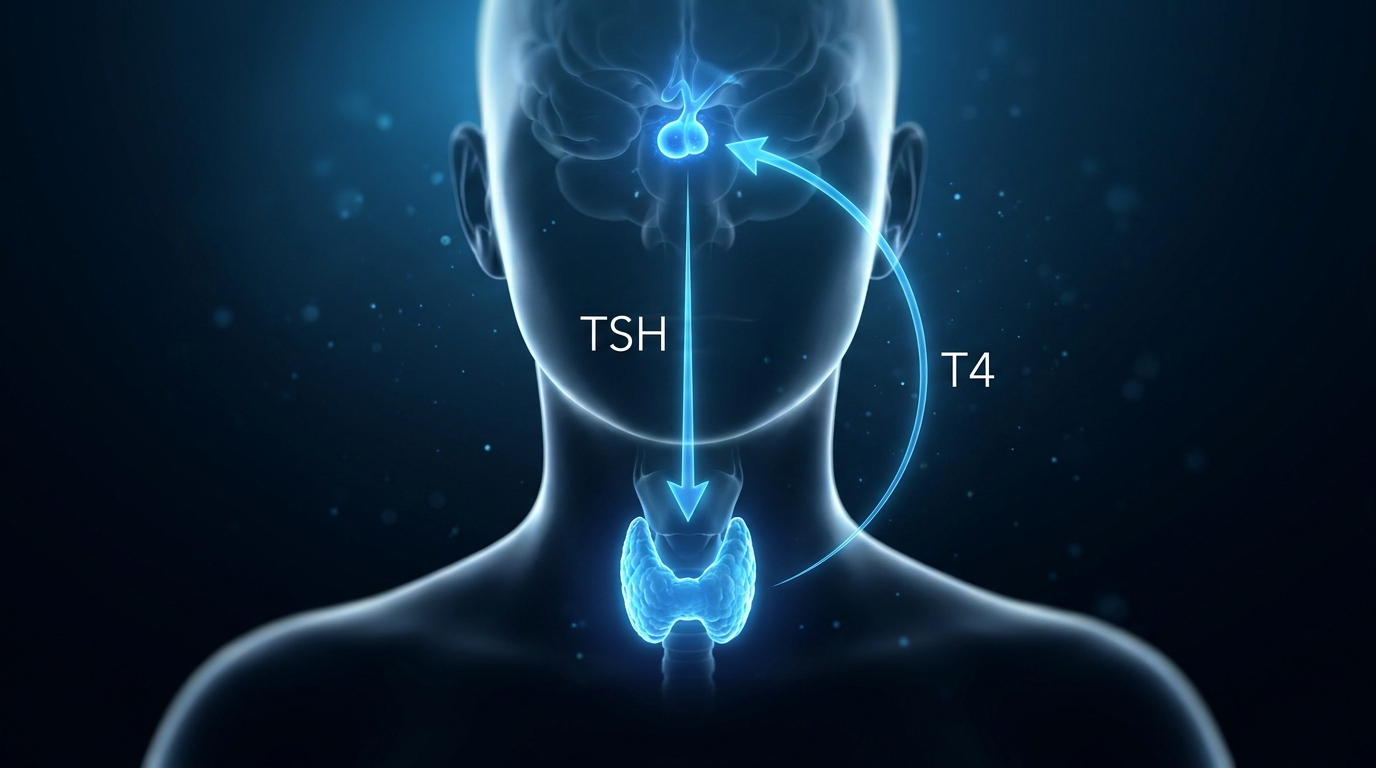
TSH (thyroid-stimulating hormone) is made by the pituitary gland and tells the thyroid how much hormone to produce. T4 (thyroxine) is the main hormone made by the thyroid. If you want to see how these glands work together, read our guide on thyroid gland anatomy and physiology.
The Royal Australian College of General Practitioners (RACGP) defines subclinical hypothyroidism as a biochemical diagnosis: an elevated TSH with a free T4 (FT4) in the normal range. This means the diagnosis comes from the lab report, not from your symptoms.
How to Read the Pattern on Your Thyroid Report
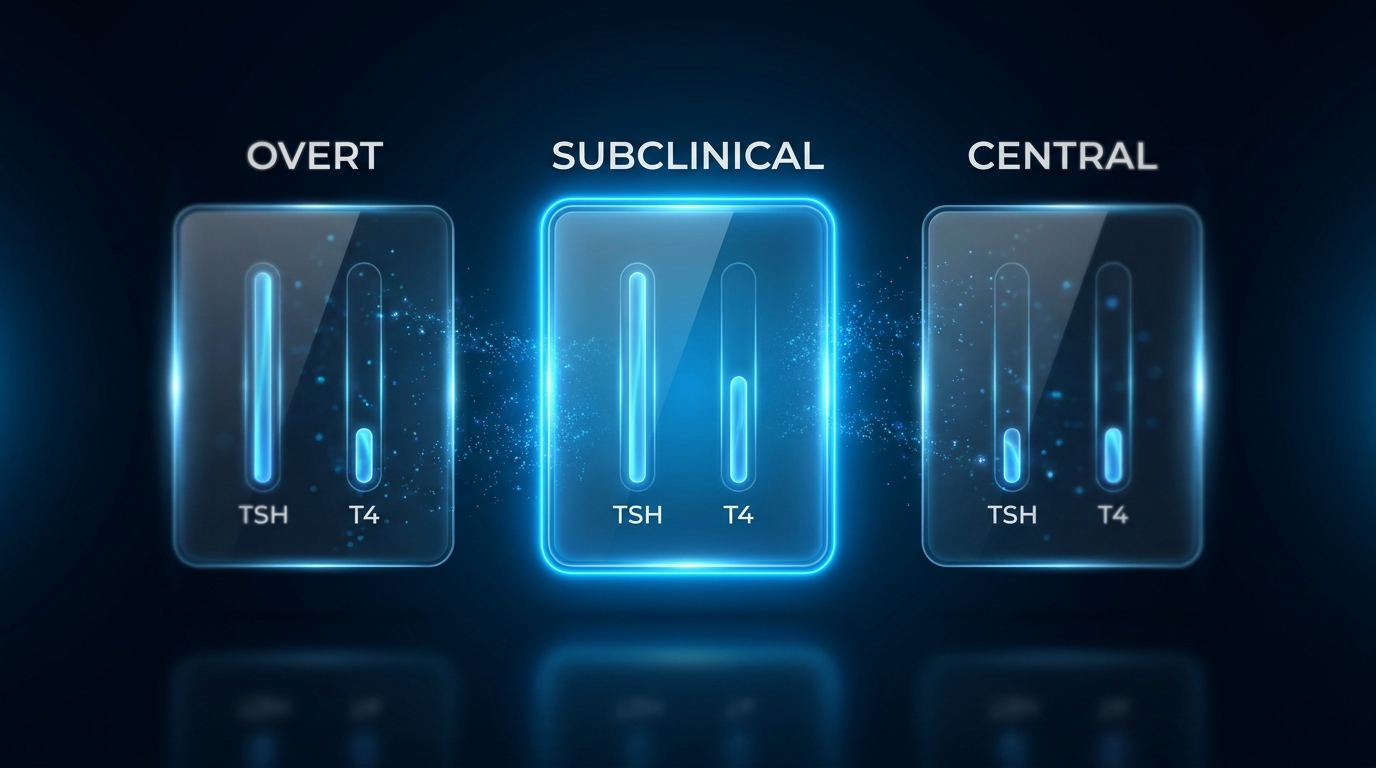
A UCSF hospital handbook summarises the main patterns like this:
| TSH | Free T4 | Usual meaning |
|---|---|---|
| High | Low | Overt (primary) hypothyroidism |
| High | Normal | Subclinical hypothyroidism |
| Low or inappropriately normal | Low | Central hypothyroidism (pituitary or hypothalamic problem) |
The same source notes that positive TPO antibodies may help predict progression to overt hypothyroidism. You can explore your own values with our thyroid function test calculator, and learn more about the test in our TSH 3rd generation test guide.
Reference ranges differ between laboratories, so always compare your result with the range printed on your own report.
What Is Considered a “Mildly Raised” TSH?
RACGP guidance describes a mildly elevated TSH as roughly 4 to 10 mIU/L with a normal FT4. Above 10 mIU/L is handled differently, as explained below. Your own lab may use a slightly different upper limit.
Do You Have Symptoms?
Often not. RACGP points out that typical hypothyroid symptoms such as fatigue, weight gain, constipation and dry skin are extremely common and non-specific, and can often be explained by lifestyle factors. This is why symptoms alone cannot confirm subclinical hypothyroidism.
RACGP also notes that weight gain is unlikely in subclinical hypothyroidism, so unexplained weight gain should not be blamed on a slightly raised TSH without looking at diet, activity and sleep.
Why a Single High TSH Result Is Not Enough
TSH changes easily. The RACGP page lists many factors that influence it, including:
- other illnesses and recent acute illness
- medications and supplements
- age, gender and ethnicity
- iodine intake
- time of day (circadian rhythm)
- thyroid autoantibodies
For this reason RACGP recommends delaying thyroid testing during an acute illness, and re-testing in two to three months when TSH is mildly elevated (4 to 10 mIU/L) with a normal FT4, to see whether the abnormality is persistent. A clinical article in a family medicine journal makes the same point: a high percentage of patients with untreated subclinical hypothyroidism show normal thyroid function on repeat testing.
If your first report shows a mildly high TSH and normal T4, the most sensible step is usually to repeat the test, not to start medicine.
What Can Cause a High TSH with Normal T4?
Common reasons include:
- Early autoimmune thyroid disease (such as Hashimoto’s thyroiditis), which TPO antibodies can point toward
- Recovery from a recent illness, when TSH can temporarily rise
- Medicines and supplements. RACGP lists iodine excess (for example from contrast dye or kelp tablets), lithium, amiodarone, interferon alfa, interleukin-2, tyrosine kinase inhibitors and immune checkpoint inhibitors
- Previous thyroid treatment, such as radioactive iodine or thyroid surgery
- Lab or sample factors, including natural variation during the day
Because kelp tablets and iodine supplements can change TSH, avoid starting them on your own to “fix” your thyroid.
Should You Test TPO Antibodies?
RACGP advises testing thyroid peroxidase antibodies (TPOAbs) when TSH is mildly elevated with a normal FT4. If the result is negative, the risk of progression is lower. If positive, monitoring is closer. RACGP also says there is no need to repeat TPO antibody testing once a positive result is known.
When Does Subclinical Hypothyroidism Need Treatment?
Most people with a TSH of 4 to 10 mIU/L and no symptoms can be monitored. RACGP states that many such patients do not need treatment.
According to RACGP, a doctor may consider a trial of treatment if the TSH is between 4 and 10 mIU/L and the person has one or more of the following:
- symptoms of hypothyroidism
- positive TPO antibodies
- elevated cardiovascular risk
- specific risk factors, such as previous radioactive iodine treatment or thyroid surgery
For a TSH above 10 mIU/L on two separate tests three months apart, together with symptoms of hypothyroidism, RACGP says to consider levothyroxine. It also notes that asymptomatic subclinical hypothyroidism above 10 mIU/L is linked with a higher risk of developing symptoms and cardiovascular events, so treatment should be considered.
The BMJ rapid recommendation and the NICE guideline on thyroid disease, both referenced by RACGP, are the main sources behind this “monitor first, treat selectively” approach.
This applies to non-pregnant adults. If you are pregnant or trying to conceive, or if the patient is a child, the approach and the TSH targets are different, so see a doctor promptly instead of waiting.
What If You Are Not Treated? How Is Monitoring Done?
For people who are monitored, UCSF suggests repeating TSH and free T4 in 2 to 3 months to rule out a temporary change, and if the diagnosis is confirmed, repeating tests every 6 to 12 months because of the risk of developing overt disease.
For people with positive TPO antibodies, RACGP suggests repeating TSH and FT4 at three months, six months and then yearly, and starting treatment if TSH keeps rising or symptoms develop. If new or worsening symptoms appear, retest, but only at least six weeks after the previous test.
What Does Treatment Look Like?
When treatment is chosen, doctors use levothyroxine, a synthetic form of T4. The dose and follow-up are individual, so never take thyroid tablets that were prescribed for someone else.
Some points from RACGP are worth knowing:
- There is no clear evidence that treating subclinical hypothyroidism with levothyroxine reduces cardiovascular risk.
- Liothyronine (T3) is not recommended for subclinical hypothyroidism, as there is no evidence to support it.
- Over-treatment can be harmful. Taking too much can suppress TSH, which is associated with a higher risk of atrial fibrillation, osteoporosis and fractures.
- If symptoms do not improve after starting levothyroxine, the doctor re-checks TSH, and if it is normal and symptoms continue, may consider stopping treatment and looking for another cause.
- Correcting a TSH that was only slightly out of range rarely changes symptoms.
Tests You Usually Do Not Need
RACGP advises that a routine assessment does not need:
- Free T3 or reverse T3 testing in routine hypothyroidism care
- A thyroid ultrasound, unless the doctor can feel a goitre or a nodule
If you are curious about gland size, see our article on normal thyroid size.
What You Can Do While You Wait for the Repeat Test
- Repeat the test as advised, ideally at a similar time of day and when you are well.
- Tell your doctor about all medicines and supplements, including biotin, iodine and kelp products.
- Review lifestyle factors: physical activity, balanced nutrition, sleep and stress. RACGP recommends addressing these first for non-specific symptoms such as tiredness.
- Do not self-diagnose with symptoms. Fatigue has many causes. Our guide to early warning signs you should not ignore explains when to see a doctor.
- Do not start thyroid supplements or iodine on your own.
When to See a Doctor Sooner
See a doctor promptly if you have a noticeably swollen neck or a lump, difficulty swallowing, a very slow heart rate, severe fatigue with feeling very cold or confusion, or if you are pregnant or planning pregnancy. These need individual assessment and should not wait for a routine repeat test.
Key Takeaways
- High TSH with a normal free T4 is called subclinical hypothyroidism, and the diagnosis is made from lab results.
- A mildly raised TSH (roughly 4 to 10 mIU/L) is usually re-tested after 2 to 3 months before any diagnosis or treatment.
- TPO antibodies help show who is more likely to progress to overt hypothyroidism.
- Many people with a mild rise and no symptoms are monitored without treatment.
- Treatment is more likely to be considered with TSH above 10 mIU/L, symptoms, positive TPO antibodies or higher cardiovascular risk.
- Over-treatment is also harmful, so never self-medicate.
Frequently Asked Questions
What does high TSH with normal T4 mean?
It is usually called subclinical hypothyroidism: the pituitary is asking the thyroid to work harder, but thyroid hormone levels are still within the normal range.
Is a high TSH with normal T4 serious?
Often it is mild and may even return to normal on a repeat test. A doctor decides based on your TSH level, symptoms, TPO antibodies and risk factors.
Do I need medicine for a TSH of 5 or 6 with normal T4?
Not necessarily. For a mildly raised TSH without symptoms, guidelines usually suggest repeating the test and monitoring before considering treatment.
What TSH level needs treatment?
There is no single number for everyone. A persistent TSH above 10 mIU/L, or a mildly raised TSH with symptoms, positive TPO antibodies or higher cardiovascular risk, is more likely to prompt treatment.
Can stress or illness raise TSH?
Recent acute illness and other factors can change TSH, which is why doctors suggest delaying tests during illness and repeating a mildly abnormal result.
Can high TSH with normal T4 cause weight gain?
Weight gain is unlikely with subclinical hypothyroidism, according to RACGP, so lifestyle and other causes should be reviewed first.
Should I take iodine or kelp supplements?
Not without medical advice. Excess iodine, including from kelp tablets, can alter TSH levels.
Disclaimer: This article is for educational purposes only and is not a substitute for professional medical advice, diagnosis or treatment. Do not start, stop or change any medicine without speaking to a qualified doctor.
References
- Royal Australian College of General Practitioners. First Do No Harm: Management of subclinical hypothyroidism. Last revised November 2022.
- UCSF Hospital Handbook. Hypothyroidism.
- Bekkering GE, et al. Thyroid hormones treatment for subclinical hypothyroidism: a clinical practice guideline. BMJ. 2019;365:l2006.
- National Institute for Health and Care Excellence. Thyroid disease: assessment and management (NG145). 2019.
- Peeters RP. Subclinical hypothyroidism. N Engl J Med. 2017;376:2556-65.