
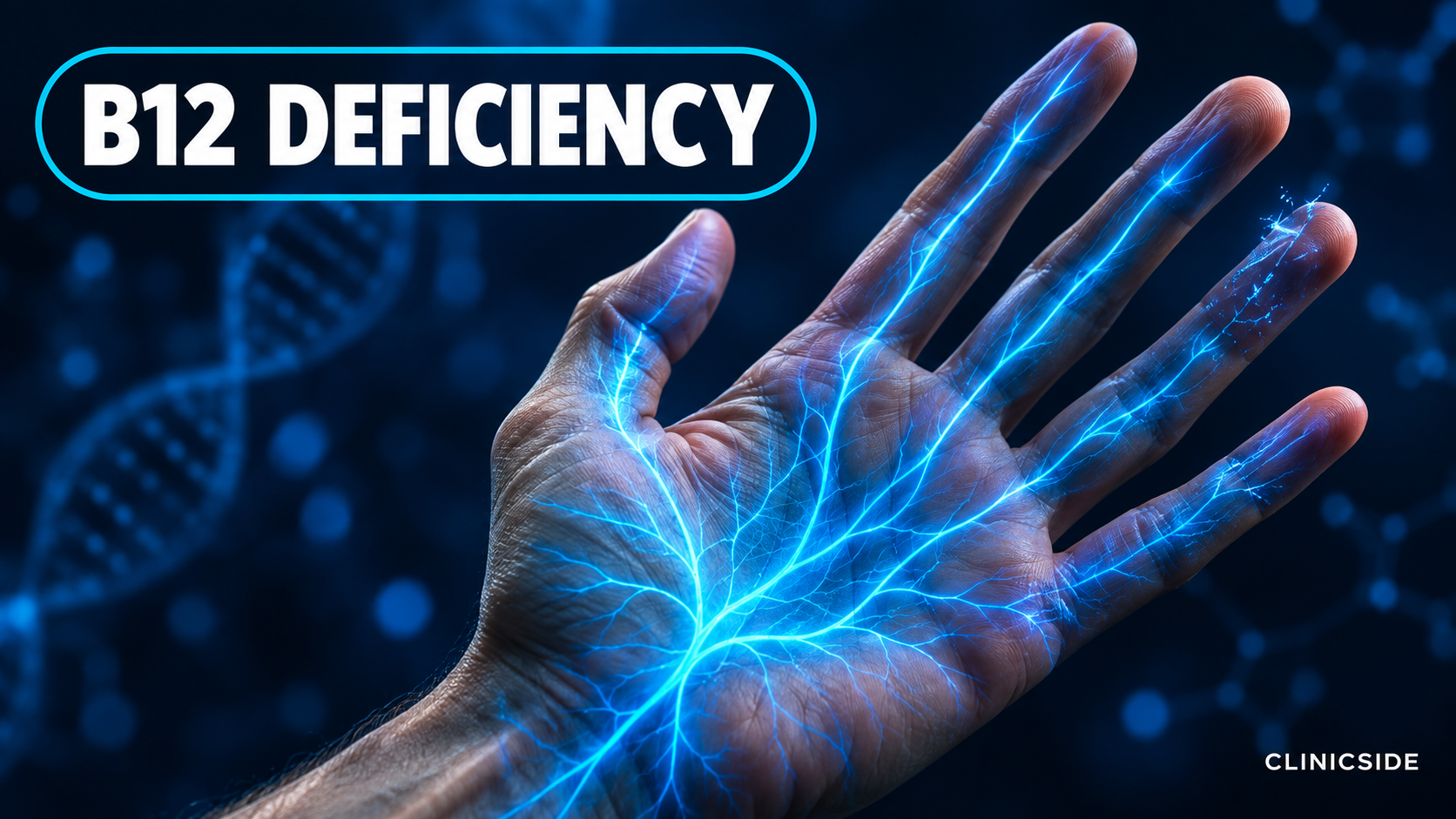

If you constantly feel tired, forgetful, or notice tingling in your hands and feet — you’re not alone. Vitamin B12 deficiency is one of the most under-diagnosed health problems in Pakistan today. Multiple studies across the country have found that anywhere between 10% and over 50% of certain population groups — including women of reproductive age, diabetics, and people with thyroid disorders — have low B12 levels (National Nutrition Survey data, PMC).
Like Vitamin D deficiency, B12 deficiency often goes unnoticed for years because its symptoms are mistaken for “stress” or “just being tired.” Left untreated, it can cause permanent nerve damage. In this guide, we’ll cover everything you need to know: symptoms, the normal range, why it’s so common in Pakistan, and exactly how to fix it.
What Is Vitamin B12 and Why Does Your Body Need It?
Vitamin B12 (cobalamin) is an essential nutrient your body cannot produce on its own — it must come entirely from food or supplements. It plays a critical role in:
- Producing healthy red blood cells
- Keeping your nervous system and brain functioning properly
- Making DNA
- Converting food into usable energy
Because B12 is found almost exclusively in animal-based foods (meat, fish, eggs, dairy), anyone whose diet leans heavily on grains, pulses, and vegetables — a very common pattern in Pakistani households — is naturally at higher risk.
How Common Is Vitamin B12 Deficiency in Pakistan?
The numbers are striking:
- A national-level survey found B12 deficiency in 52.4% of women of reproductive age across Pakistan (PMC study)
- Among type 2 diabetics on long-term metformin, prevalence has been reported as high as 36–46% in different Pakistani studies (PMC)
- Nearly 40% of hypothyroid patients in Karachi were found to be B12 deficient
- A Karachi primary-care study confirmed it’s a widespread issue even among people who aren’t specifically at “high risk” (Bahria University Medical & Dental College)
This makes B12 deficiency arguably as common in Pakistan as Vitamin D deficiency — yet far fewer people get tested for it.
Symptoms of Vitamin B12 Deficiency
Symptoms usually develop slowly, which is exactly why they’re so often ignored. They generally fall into three categories:

Physical symptoms
- Constant fatigue and weakness
- Pale or slightly yellowish skin
- Shortness of breath, especially on exertion
- Dizziness and headaches
- Rapid heartbeat
Neurological symptoms
- Numbness or “pins and needles” in hands and feet
- Difficulty with balance or walking
- Muscle weakness
- A sore, swollen, or unusually smooth-looking tongue
Mental and emotional symptoms
- Poor concentration and memory problems
- Brain fog
- Irritability or low mood
- In more severe, long-standing cases: depression or confusion
Neurological symptoms in particular are a red flag — Pakistani neurology studies have found that nerve numbness is one of the most common presenting complaints among diagnosed patients (Pakistan Society of Neurosurgeons journal). These symptoms can become permanent if the deficiency isn’t corrected in time, which is why early testing matters.
Vitamin B12 Normal Range: What Do Your Test Results Mean?
Reference ranges can vary slightly between labs, but the values below are the most widely accepted internationally and reflected in Pakistani clinical studies as well (reference table, PMC):
| Category | Vitamin B12 Level (pg/mL) |
|---|---|
| Deficient | Below 200 |
| Borderline / Insufficient | 200 – 300 |
| Normal | 300 – 900 |
A quick note: if your result falls in the “borderline” range but you have symptoms, don’t dismiss it as normal. Many doctors recommend treating borderline levels too, since symptoms can appear even before levels drop into the clearly “deficient” zone.
What Causes Vitamin B12 Deficiency in Pakistan?
The causes here are a mix of diet, medications, and gut health issues — several of which are especially common locally:
1. Diet heavy in wheat, rice, and pulses, low in animal protein
With rising food prices, many households have shifted toward more roti, rice, and daal, and less meat, fish, and eggs — the main natural sources of B12.
2. Widespread use of Metformin for diabetes
Metformin, one of the most commonly prescribed diabetes medications in Pakistan, is well-documented to interfere with B12 absorption over long-term use (Pakistani case-control study, PMC).
3. Overuse of antacids and acid-reducing medication
Stomach acid is needed to release B12 from food. Long-term, frequent use of antacids for acidity (very common with spicy diets) can reduce absorption.
4. Gut infections and gastritis
Conditions like gastritis and parasitic infections such as giardiasis — more common where clean water access is limited — interfere with B12 absorption.
5. Vegetarian or near-vegetarian diets
Even people who aren’t strictly vegetarian but rarely eat meat, fish, or eggs are at elevated risk.
6. Pregnancy and breastfeeding
B12 needs increase during pregnancy (2.6 mcg/day) and breastfeeding (2.8 mcg/day) compared to the standard adult requirement of 2.4 mcg/day, making deficiency more likely if diet doesn’t adjust (NIH LactMed).

Who Is Most at Risk in Pakistan?
- People with diabetes, especially those on Metformin long-term
- Anyone with thyroid disorders
- Pregnant and breastfeeding women
- Older adults (60+), whose stomachs naturally produce less acid
- People who eat little to no meat, fish, eggs, or dairy
- Anyone with chronic acidity who regularly takes antacids
- People with digestive conditions (gastritis, IBS, prior stomach surgery)
How Is Vitamin B12 Deficiency Diagnosed?
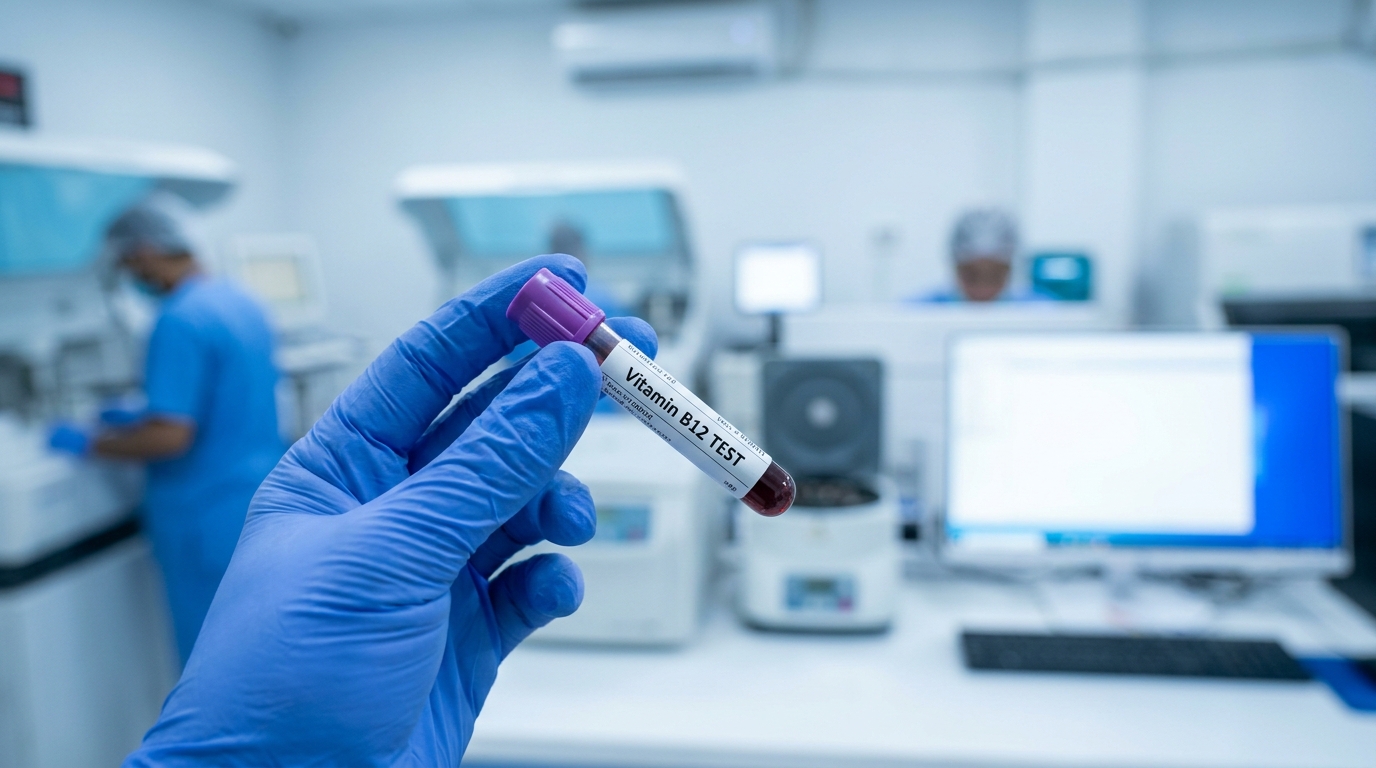
Diagnosis is simple: a serum Vitamin B12 blood test, available at most labs and clinics across Pakistan. No fasting is usually required unless your doctor specifically advises it. In borderline cases, doctors may also check Complete Blood Count (CBC) for signs of anemia, or additional markers like methylmalonic acid and homocysteine for a clearer picture.
If you’ve been feeling persistently tired, foggy, or numb, don’t self-diagnose — book a B12 test and get an accurate number before starting supplements.
How to Fix Vitamin B12 Deficiency
Treatment depends on how low your levels are and what’s causing the deficiency.
Mild to moderate deficiency
- Dietary changes (see food list below)
- Daily oral B12 supplements or sublingual (under-the-tongue) tablets, which are often better absorbed
- Rechecking levels after 8–12 weeks
Severe deficiency or absorption problems
- Vitamin B12 injections (intramuscular), often given a few times a week initially, then monthly for maintenance
- This route bypasses the gut entirely, which is important for people whose deficiency is caused by poor absorption rather than poor diet
If caused by Metformin or antacids
- Your doctor may recommend switching medication or adding a B12 supplement alongside your existing treatment — don’t stop prescribed medication without medical advice.
Most people start feeling improvement in energy within a few weeks, though nerve-related symptoms can take several months to fully resolve.
Vitamin B12 Rich Foods for a Pakistani Diet
Good news — correcting mild deficiency through food is very achievable with locally available options:
| Food | Approx. B12 Content |
|---|---|
| Liver (kaleji) — chicken, beef, or mutton | Extremely high — even a small serving covers your full daily need |
| Fish (especially salmon, tuna, rohu) | High |
| Eggs (whole) | Moderate |
| Milk (doodh) | Moderate |
| Yogurt (dahi) | Moderate |
| Paneer / cottage cheese | Moderate |
| Chicken and red meat | Moderate |
| Fortified cereals | Variable (check label) |
For strict vegetarians, food alone often isn’t enough — a daily supplement or fortified foods become necessary since plant foods don’t naturally contain B12.

How to Prevent Vitamin B12 Deficiency
- Include at least one animal-protein source (egg, meat, fish, or dairy) in your daily diet where possible
- Get an annual B12 test if you’re diabetic, over 50, pregnant, or largely vegetarian
- Avoid long-term, unsupervised use of antacids
- If you’re on Metformin long-term, ask your doctor about periodic B12 screening
- Don’t self-treat with high-dose supplements without testing first — get your baseline number
When Should You See a Doctor?
See a doctor promptly if you notice:
- Persistent numbness or tingling in hands/feet
- Unexplained fatigue that doesn’t improve with rest
- Memory problems or confusion
- Difficulty with balance or walking
- Pale skin with shortness of breath
These can be early signs of nerve involvement, and earlier treatment means a much better chance of full recovery.
Frequently Asked Questions
Is Vitamin B12 deficiency common in Pakistan?
Yes — studies show it affects a significant portion of the population, especially women, diabetics, and people with thyroid conditions, with some groups showing deficiency rates above 40%.
What is a normal Vitamin B12 level?
Generally, 300–900 pg/mL is considered normal, below 200 pg/mL is deficient, and 200–300 pg/mL is borderline.
Can Vitamin B12 deficiency be reversed?
Yes, in most cases. Diet changes and supplements/injections can fully restore levels, though severe nerve symptoms may take longer to improve and, if left too long, may not fully reverse.
Do vegetarians need B12 supplements?
Almost always, yes — since B12 is found mainly in animal products, vegetarians and vegans typically cannot get enough through diet alone.
Can low B12 cause hair fall or weight issues?
It can contribute to general fatigue and weakness that indirectly affects overall health, though hair fall is not considered a primary symptom of B12 deficiency on its own.
How is Vitamin B12 deficiency treated — tablets or injections?
It depends on severity. Mild deficiency is usually managed with oral or sublingual supplements; severe deficiency or absorption disorders are treated with B12 injections.
Vitamin B12 Deficiency Knowledge Quiz
Available options: 1 to 20
Conclusion
Vitamin B12 deficiency is quietly widespread across Pakistan, and — much like Vitamin D deficiency — it’s easy to overlook until symptoms start affecting daily life. The good news is that it’s simple to test for and very treatable once caught. If you’ve been feeling unusually tired, foggy, or have noticed tingling in your hands or feet, don’t wait it out — book a Vitamin B12 test today and get clarity on where you stand.