

Caring for a bedridden loved one at home is one of the most demanding — and most meaningful — responsibilities a family can take on. Whether your parent is recovering from major surgery, your spouse is living with the aftermath of a stroke, or an aging relative can no longer get out of bed on their own, the daily reality of home-based care is often overwhelming at first. There’s no manual handed to you at the hospital door.
This guide is that manual. It walks through everything a caregiver actually needs to know — from setting up the bed and room correctly, to hygiene, nutrition, toileting, emotional wellbeing, and the warning signs that mean it’s time to call a doctor. Whatever the reason behind it, confident bedridden patient care at home comes down to a few consistent daily habits, not complicated medical training. If your loved one is also at risk of pressure injuries, pair this guide with our detailed Bed Sore Prevention & Care at Home guide, which covers repositioning and skin care in more depth.

What Does It Mean for a Patient to Be “Bedridden”?
A person is considered bedridden when they’re unable to get out of bed, stand, or carry out daily activities without full assistance. This can be temporary — such as the first few weeks after a hip replacement or a major abdominal surgery — or long-term, as with advanced Parkinson’s disease, late-stage dementia, spinal cord injury, or severe stroke.
Being confined to bed doesn’t just limit movement. It affects circulation, digestion, muscle strength, skin health, breathing, and mental health all at once. That’s why bedridden care at home is really a system of several smaller routines working together, not a single task.
Common reasons a family member becomes bedridden include:
- Recovery after major surgery or a serious accident
- Stroke or traumatic brain injury
- Advanced age combined with frailty or multiple chronic conditions
- Late-stage neurological disease (Parkinson’s, ALS, advanced dementia)
- Severe arthritis or fractures that limit mobility
- End-of-life or palliative care needs
Understanding why your loved one is bedridden helps you anticipate which complications to watch for most closely — a post-surgical patient has different risks than someone with advanced dementia, for example.
‘Setting Up a Safe Bed Space for a Bedridden Patient’
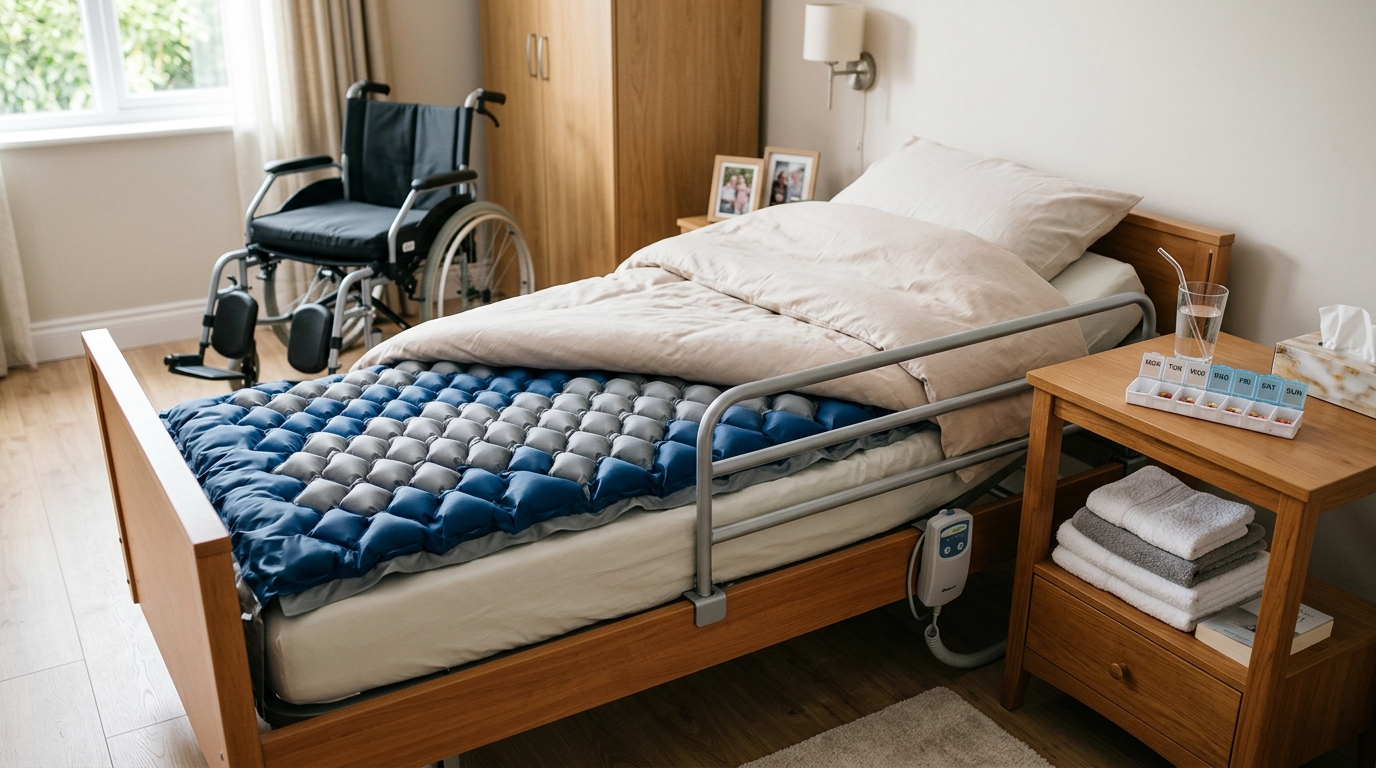
Before you settle into a daily routine, the physical setup of the room matters more than most families expect. A well-arranged space reduces the physical strain on you as a caregiver and lowers the risk of falls, pressure injuries, and infections for the patient.
Bed positioning: Place the bed so you can access both sides easily. This makes repositioning, changing linens, and hygiene tasks far less physically taxing.
Mattress choice: A standard mattress isn’t ideal for someone who will spend most of the day lying down. An alternating-pressure air mattress or a high-density foam mattress significantly reduces pressure on the skin and lowers bedsore risk.
Bed rails: These prevent accidental falls when the patient shifts position and give them something to hold onto if they have some ability to move.
Room temperature and airflow: Keep the room comfortably ventilated. Bedridden patients are more sensitive to temperature extremes since they can’t easily adjust blankets or clothing themselves.
Within-reach essentials: A bedside table with water, tissues, a call bell or phone, reading glasses, and any frequently used items reduces both patient frustration and unnecessary trips for the caregiver.
‘Repositioning a Bedridden Patient: The Most Important Daily Routine’
If there’s one habit that prevents more complications than any other, it’s repositioning. Lying in one position for too long cuts off blood flow to the skin and soft tissue, which is how bedsores (pressure ulcers) begin — often within just a few hours.
As a general rule, reposition a bedridden patient every 2 hours during the day and at least every 3–4 hours overnight if they cannot shift themselves. Rotate through positions: lying on the back, then the left side, then the right side, using pillows to support the legs, back, and between the knees.
Pay particular attention to pressure points that break down fastest: the heels, hips, tailbone, shoulder blades, elbows, and the back of the head. A small heel cushion or foam wedge can prevent a surprising number of problems on its own.
For a full breakdown of positioning schedules, skin inspection routines, and treating early-stage pressure sores, our Bed Sore Prevention & Care at Home guide covers this in complete detail — it’s worth reading alongside this one.
For additional step-by-step positioning techniques, MedlinePlus’s guide on turning patients in bed is a reliable reference.

‘Hygiene and Skin Care for a Bedridden Patient’
Skin is the body’s first line of defense, and for a bedridden patient it takes constant, quiet abuse from moisture, friction, and pressure. A consistent hygiene routine protects against both infection and skin breakdown.
- Bathing: A full bed bath 2–3 times a week, with a face-and-hands wash daily, keeps skin clean without over-drying it. Use lukewarm water and a mild, fragrance-free soap.
- Drying technique: Pat the skin dry rather than rubbing — rubbing damages fragile, pressure-weakened skin.
- Moisturizing: Apply a gentle, unscented moisturizer after bathing, but avoid heavy application directly over pressure points, where excess moisture can actually soften skin and increase breakdown risk.
- Oral care: Brush teeth (or clean dentures) twice daily and moisten the lips and mouth regularly, especially if the patient breathes through their mouth or is on limited fluids.
- Hair and nails: Keep hair clean and nails trimmed short — this is both a comfort issue and a hygiene one, since long nails can scratch fragile skin during repositioning.
- Linen changes: Change and smooth bedsheets daily, and immediately after any spill or soiling. Wrinkled sheets are a surprisingly common cause of new pressure points.
‘Nutrition and Hydration for a Bedridden Patient’
Immobility slows metabolism, but nutritional needs — especially protein — often go up, not down, because the body needs building blocks to prevent muscle wasting and support skin repair.
Protein: Include eggs, dal, curd, paneer, fish, or lean meat at most meals to support tissue repair and reduce bedsore risk.
Fiber: Bedridden patients are prone to constipation due to inactivity. Include vegetables, whole grains, and fruit, and consider soluble fiber if constipation persists.
Hydration: Aim for 6–8 glasses of fluid a day unless a doctor has restricted intake (common in kidney or heart conditions). Dehydration in bedridden patients often shows up subtly — as confusion, dark urine, or dry mouth — before it becomes serious.
Texture and swallowing safety: If your loved one has swallowing difficulties (common after stroke), softer or pureed textures and smaller, more frequent meals reduce the risk of choking or aspiration. A speech-language therapist can formally assess swallowing safety if you’re unsure.
Feeding position: Always feed a bedridden patient sitting upright at a 45–90 degree angle where possible, and keep them upright for at least 30 minutes after eating to reduce aspiration risk.

Toileting, Catheter, and Incontinence Care
This is often the part new caregivers find hardest to adjust to — but a calm, matter-of-fact routine makes it far easier for both of you.
Using a bedpan or commode: Keep supplies within reach, maintain privacy as much as possible, and clean the area gently but thoroughly afterward.
Incontinence pads and diapers: Change as soon as possible after soiling — prolonged contact with moisture is one of the fastest ways skin breaks down. Apply a barrier cream after cleaning to protect skin from irritation.
Catheter care (if applicable): Keep the catheter bag below bladder level to prevent backflow, clean the area around the insertion site daily, and watch for signs of infection — cloudy or foul-smelling urine, fever, or redness at the site.
Skin protection: After any toileting task, clean gently with mild soap and water, pat dry, and apply a barrier cream before repositioning.
Managing Medications and Monitoring Health
Home caregivers often become the de facto medication manager, and mistakes here can be serious. A few habits make this safer:
- Keep a written or app-based medication schedule with times, dosages, and purpose for each medicine
- Use a pill organizer sorted by day and time
- Track vital signs your doctor has asked you to monitor — temperature, blood pressure, or blood sugar — and log them so patterns are easy to spot at follow-up visits
- Keep an updated list of all medications, allergies, and diagnoses somewhere accessible in case of an emergency room visit
Mental and Emotional Wellbeing — For Both of You
Physical care gets most of the attention, but the emotional toll of being bedridden — and of being a caregiver — is just as real.
For the patient: Isolation and loss of independence often lead to low mood or withdrawal. Simple things help: keeping the television, radio, or books accessible, opening curtains for natural light, encouraging visits from friends and family, and involving the patient in small decisions about their own care whenever possible.
For the caregiver: Caregiving is physically and emotionally exhausting, and burnout is common. Accepting help from other family members, taking short breaks, and staying connected to your own support network aren’t optional extras — they’re what allow you to keep providing good care over the long term.

Preventing Common Complications
Beyond bedsores, a few other complications are particularly common in bedridden patients, and most are preventable with consistent daily care:
- Pneumonia: Encourage deep breathing exercises or use of an incentive spirometer if prescribed, and keep the patient upright during and after meals.
- Blood clots (DVT): Gentle leg exercises, compression stockings if recommended by a doctor, and regular repositioning all help circulation.
- Muscle atrophy and joint stiffness: Passive range-of-motion exercises — gently moving each joint through its natural range once or twice daily — help preserve mobility and reduce pain.
- Urinary tract infections: Adequate hydration, prompt hygiene after toileting, and proper catheter care (if applicable) reduce risk significantly.
- Constipation: Fiber, hydration, and gentle abdominal massage can help; persistent constipation should be discussed with a doctor.
‘Warning Signs in a Bedridden Patient That Need Medical Attention’
Contact a doctor promptly if you notice:
- A fever, or skin that feels unusually warm
- A new or worsening pressure sore, especially if it looks infected (increased redness, warmth, swelling, or discharge)
- Confusion or sudden changes in alertness
- Difficulty breathing, or breathing that sounds wet or rattling
- Swelling, redness, or pain in one leg (a possible sign of a blood clot)
- Little or no urine output over several hours
- Refusal to eat or drink for more than a day
When in doubt, it’s always safer to call your doctor or home-care nurse than to wait and see.

Essential Equipment Checklist
- Alternating-pressure air mattress or high-density foam mattress
- Bed rails
- Bedside table
- Waterproof mattress protector
- Incontinence pads or diapers, plus barrier cream
- Bedpan or bedside commode
- Pressure-relief cushions (heel and elbow protectors)
- Pill organizer and a simple medication log
- Hoyer lift or transfer board (for patients who need to be moved to a chair or wheelchair)
Frequently Asked Questions
How often should a bedridden patient be repositioned? Every 2 hours during the day and every 3–4 hours at night is the standard guideline, though patients at higher risk of bedsores may need more frequent repositioning.
What is the best diet for a bedridden patient? A protein-rich diet with adequate fiber and hydration supports tissue repair, prevents constipation, and helps maintain muscle mass. Soft or pureed textures may be needed if swallowing is difficult.
How can I prevent bedsores in a bedridden patient at home? Consistent repositioning, a pressure-relieving mattress, daily skin inspection, and prompt cleanup after any moisture exposure are the most effective prevention steps. See our full Bed Sore Prevention & Care at Home guide for a complete routine.
How do you bathe a bedridden patient safely? A full bed bath 2–3 times a week using lukewarm water and mild soap, with daily cleaning of the face, hands, and any soiled areas, keeps skin clean without drying it out excessively.
What are the signs that a bedridden patient needs to see a doctor immediately? Fever, confusion, difficulty breathing, a worsening pressure sore, leg swelling or pain, or little to no urine output all warrant prompt medical attention.
Can a bedridden patient recover their mobility? It depends on the underlying cause. Patients recovering from surgery or acute illness often regain mobility with physical therapy, while those with progressive conditions may not — but maintaining muscle strength and joint flexibility through passive exercises still improves comfort and quality of life either way.
Bedridden Patient Care at Home Knowledge Quiz
Available options: 1 to 20
Key Takeaways for Caregivers
- Reposition every 2 hours during the day and every 3–4 hours at night to prevent bedsores
- Choose a pressure-relieving mattress and keep bed rails in place for safety
- Bathe 2–3 times a week, pat skin dry, and moisturize gently — avoid rubbing fragile skin
- Prioritize protein, fiber, and 6–8 glasses of fluid daily unless a doctor has restricted intake
- Change incontinence pads promptly and apply barrier cream to protect skin
- Keep a written medication schedule and log any vitals your doctor asks you to track
- Watch for fever, confusion, breathing changes, or a worsening pressure sore — and call a doctor promptly
- Don’t skip your own rest and support — sustainable caregiving depends on it
This article is for general educational purposes and isn’t a substitute for advice from your loved one’s doctor or home-care nursing team. Always follow the specific care plan given by your healthcare provider.