Reproduction in living organisms is a fundamental biological process that ensures the continuity of life on Earth. Through reproduction, organisms produce new individuals of their own kind, allowing species to survive, adapt, and evolve over time. Without reproduction, life would cease to exist after a single generation.
Reproduction in living organisms occurs through different methods depending on the complexity and structure of the organism. These methods are broadly classified into asexual reproduction and sexual reproduction, each having unique mechanisms and biological significance.
Quiz
Available options: 1 to 20
What is Reproduction?
Reproduction is the biological process by which living organisms produce offspring similar to themselves. It is one of the essential characteristics of life, along with growth, metabolism, and responsiveness. Reproduction in living organisms not only maintains population size but also plays a crucial role in genetic variation and evolution.
Types of Reproduction in Living Organisms
Reproduction in living organisms is mainly divided into two major types:
- Asexual Reproduction
- Sexual Reproduction
Asexual Reproduction
Asexual reproduction is a mode of reproduction in which a single parent produces offspring without the involvement of gametes or fertilization. The offspring produced are genetically identical to the parent and are known as clones.
Characteristics of Asexual Reproduction
- Involves only one parent
- No formation or fusion of gametes
- Offspring are genetically identical
- Faster and simpler process
Types of Asexual Reproduction
1. Binary Fission
Binary fission is the most common method of asexual reproduction in unicellular organisms such as Amoeba and bacteria. The parent cell divides into two equal daughter cells.
2. Multiple Fission
In multiple fission, the nucleus divides repeatedly to form many nuclei, followed by cytoplasmic division. This type of reproduction in living organisms is seen in Plasmodium.
3. Budding
Budding occurs when a small outgrowth develops on the parent body, grows, and eventually detaches. Yeast and Hydra reproduce through budding.
4. Fragmentation
In fragmentation, the parent body breaks into fragments, and each fragment develops into a new organism. This method is seen in Spirogyra.
5. Vegetative Propagation
Vegetative propagation is common in plants. New plants develop from roots, stems, or leaves. Examples include potato, onion, and Bryophyllum.
Sexual Reproduction
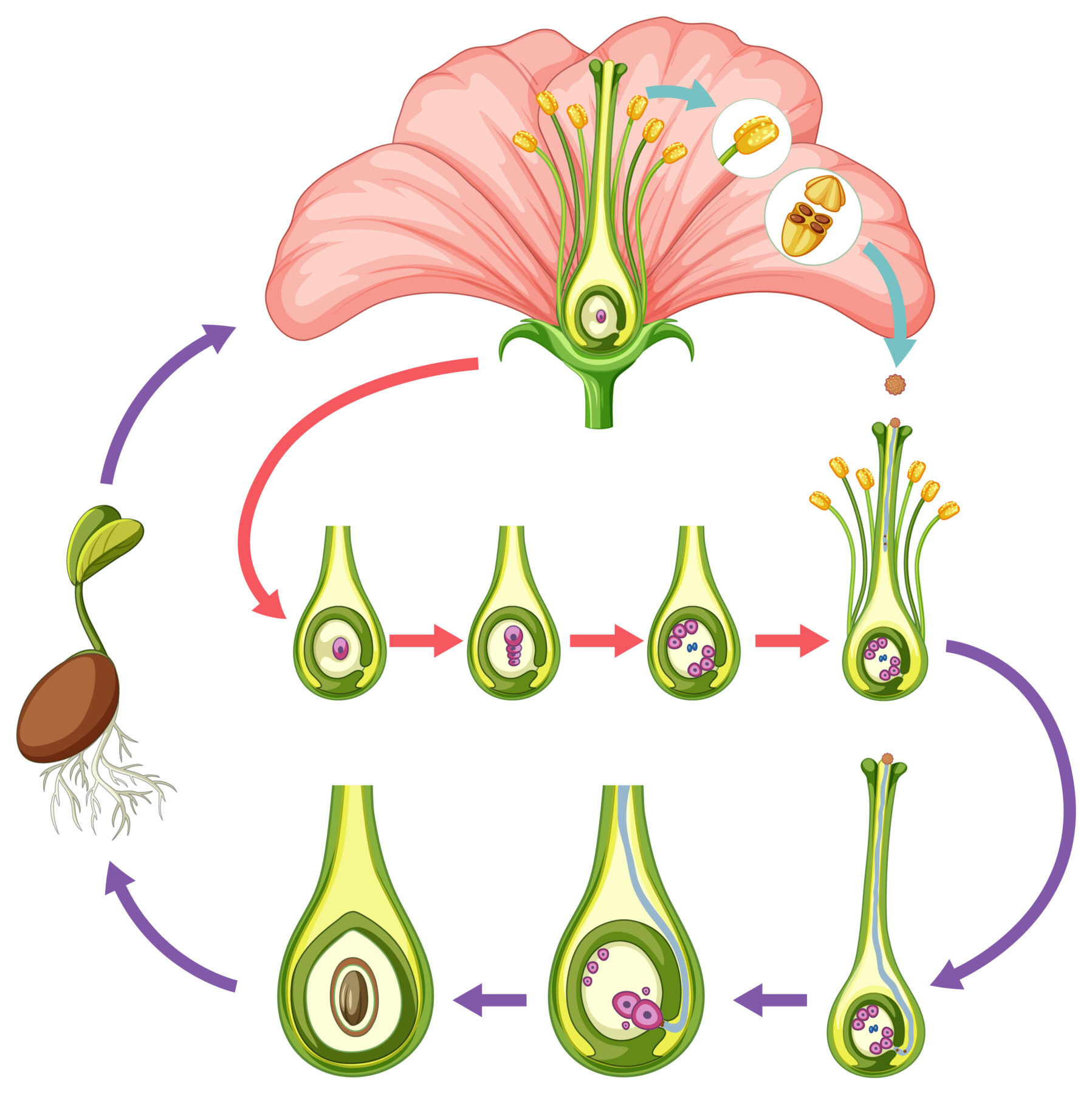
Sexual reproduction is a complex process involving two parents and the fusion of male and female gametes. This type of reproduction in living organisms leads to genetic variation, which is essential for evolution and adaptation.
Characteristics of Sexual Reproduction
- Involves two parents
- Formation of male and female gametes
- Fertilization occurs
- Offspring show genetic variation
Process of Sexual Reproduction
1. Gamete Formation
Gametes are produced through meiosis, a special type of cell division that reduces the chromosome number by half.
2. Fertilization
Fertilization is the fusion of male and female gametes to form a zygote. It can be:
- External fertilization (fish, frogs)
- Internal fertilization (humans, birds)
3. Development
The zygote undergoes repeated mitotic divisions and develops into an embryo, which later grows into a mature organism.
Importance of Reproduction in Living Organisms
Reproduction in living organisms is vital for several reasons:
- Ensures continuity of species
- Maintains population stability
- Produces genetic variation
- Supports evolution and adaptation
- Helps organisms survive changing environments
Difference Between Asexual and Sexual Reproduction
| Feature | Asexual Reproduction | Sexual Reproduction |
|---|---|---|
| Number of parents | One | Two |
| Gametes involved | No | Yes |
| Genetic variation | Absent | Present |
| Speed | Fast | Slow |
| Examples | Amoeba, Yeast | Humans, Plants |
Conclusion
Reproduction in living organisms is an essential biological process that maintains life on Earth. Asexual reproduction allows rapid multiplication, while sexual reproduction introduces variation necessary for evolution. Understanding the types and mechanisms of reproduction helps students grasp how life continues, adapts, and evolves over generations.